Why Tampa's Hard Water Is Wrecking Your Pipes and Appliances
Tampa Bay water runs about 11.7 gpg, classified as very hard, and it's quietly shortening the life of everything it touches.
What 'hard' actually means here
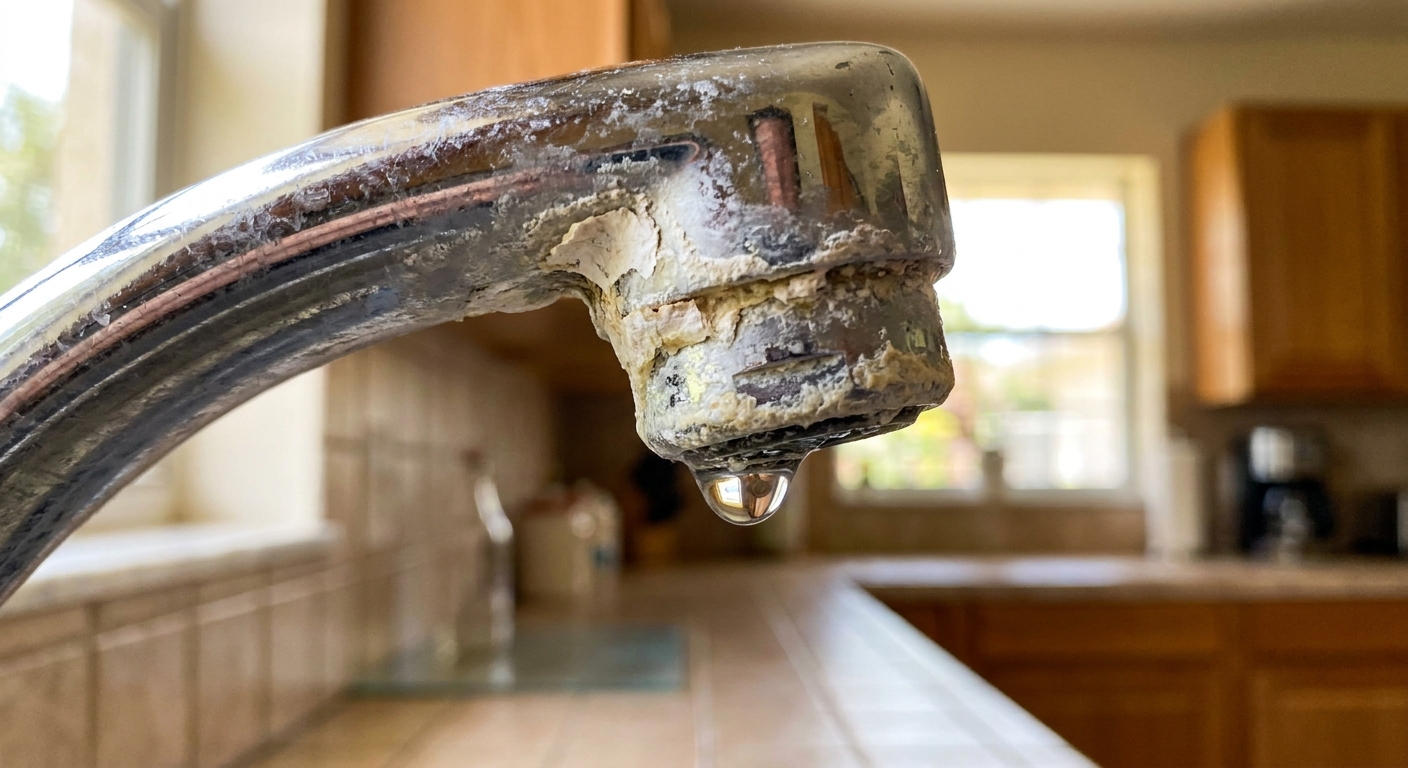
Tampa Bay draws from the Floridan Aquifer, which is loaded with dissolved calcium and magnesium. That's what makes our water measure around 11.7 grains per gallon most of the year, classified as "very hard." You'll notice it before you ever test it: white crusting on faucets, cloudy glassware straight out of the dishwasher, and soap that won't lather right.
Where the damage shows up first
Water heaters take the worst hit. Mineral scale builds up on the heating element and along the tank bottom, which makes the unit work harder and cuts its lifespan by several years. Tankless units are even more sensitive, since scale narrows the internal passages and throws error codes. Showerheads clog, ice makers slow down, and washing machines need more detergent to do the same job. On top of that, scale buildup inside supply lines gradually reduces water pressure throughout the house.
What actually fixes it
A whole-house water softener sized for Tampa's real hardness, not the national average, is the only permanent fix. A plumber or water-treatment pro should size the unit from a measured grains-per-gallon reading rather than the 7-10 gpg most manufacturers assume, because undersizing means you're back to square one in a year. Tampa water still averages about 11.7 gpg. If a full softener isn't in the budget yet, a sacrificial anode rod and annual water heater flush will buy you time. Either way, don't ignore it. A neglected water heater in Tampa water dies years before its rated life.
Rather have a pro handle it?
Call to get matched with a licensed local plumber. The plumber will confirm the scope, estimate terms, and current scheduling.
Keep reading.
Polybutylene Pipes: What Every Tampa Homeowner Built Between 1978-1995 Needs to Know
If your home was built in that window, especially in Carrollwood, Town 'n' Country, or New Tampa, there's a real chance you're living with pipes insurers no longer want to cover.
Slab Leaks in Tampa: Warning Signs and What to Do First
Sandy soil, slab-on-grade construction, and hard water make Tampa one of the worst spots in Florida for slab leaks. Catching one early saves your foundation.
Water Heater Lifespan in Tampa: Why Yours Won't Last as Long as the Box Says
Manufacturers rate tank water heaters for 10-12 years. In Tampa's hard water, expect closer to 6-8 unless you're maintaining it.