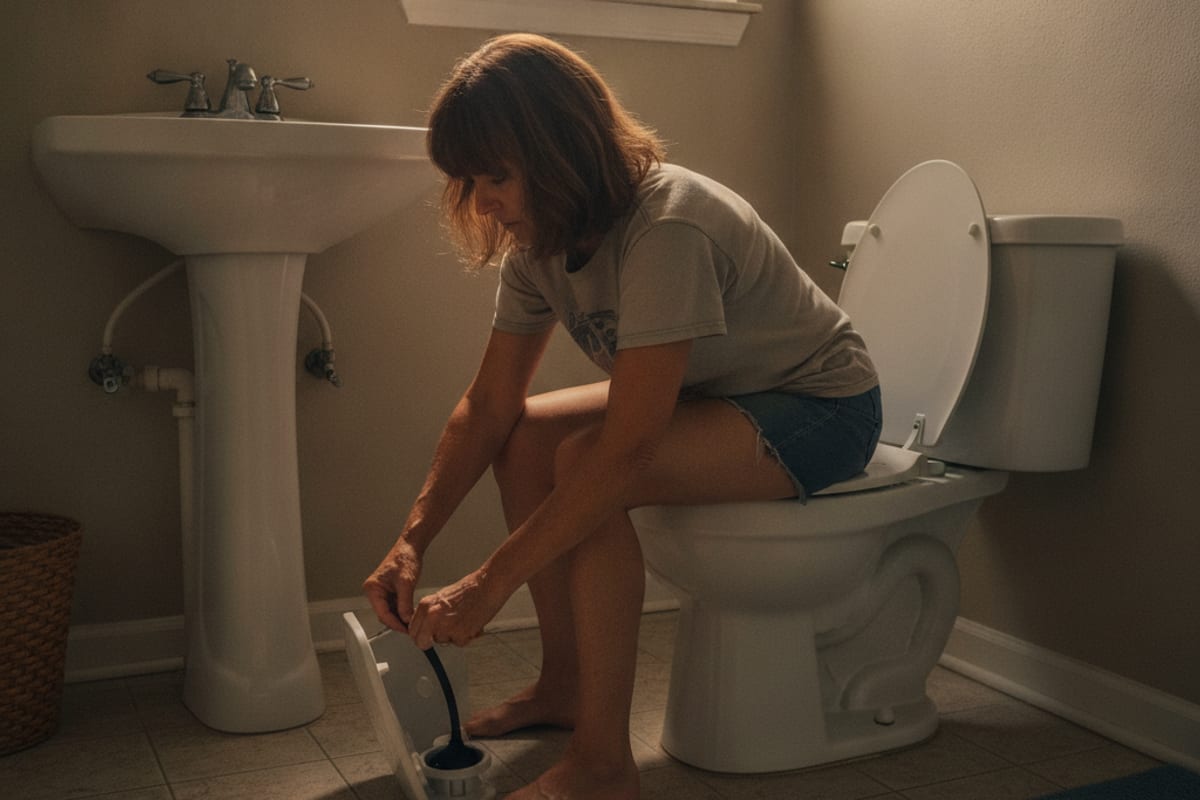
Tampa homeowners save real money fixing small plumbing problems themselves, and they lose real money guessing wrong on the ones that actually need a plumber. The difference usually comes down to whether the problem is a worn part you can see and swap, or a symptom of something bigger happening behind a wall, under a slab, or underground. If water is running where it shouldn’t, shut it off before you start.
| DIY-ok in a Tampa Bay home | Call a licensed plumber now |
|---|---|
| Toilet flapper or fill valve | Recurring backups, sewage in a tub, or more than one drain slowing at once |
| Plunger or hand auger on one sink | Camera work on a sewer line, especially pre-1975 cast iron |
| Faucet cartridge or showerhead swap | Gas line, water heater gas control, or anything behind a wall |
| Tightening a toilet that isn’t rocking | A rocking toilet, a failed wax ring, or a cracked flange |
Here’s a straight rundown of what’s safe to handle yourself in a Tampa Bay home, what pushes a job into professional territory, and why some of the usual DIY advice you’ll find online doesn’t quite hold up in this market.
What Tampa’s water and housing stock change about DIY repair
Two things make plumbing here different from a generic online repair guide. First, hard water. Hillsborough, Pinellas, and Pasco counties run 11 to 17 grains per gallon depending on season and source, and that mineral load coats valves, flappers, and pipe interiors faster than it would in a softer-water market. Parts that would last a decade elsewhere often need attention every 3 to 5 years here, which means Tampa homeowners run into DIY-friendly repairs more often, not less.
Second, housing age varies block to block. A Seminole Heights bungalow from the 1920s is likely running original cast iron drain lines. A 1985 ranch in Carrollwood or Town ‘n’ Country may have polybutylene supply pipe, a material that fails from the inside with no warning. A newer build in Brandon or FishHawk is probably running PEX and PVC with fewer surprises. Knowing which category your house falls into changes how confident you should be reaching for a wrench versus a phone.
Repairs that are genuinely safe to DIY
A running toilet is the most common plumbing complaint in the region, and it’s also one of the easiest fixes. If the flapper isn’t sealing against the flush valve seat, usually from mineral scale buildup, replacing it is a 15-minute job with a $10 part from any hardware store. A fill valve that won’t shut off is nearly as simple. Both are well within toilet repair territory that most homeowners can handle without calling anyone, as long as the tank and bowl themselves aren’t cracked.
A slow bathroom or kitchen sink drain, cleared with a plunger, a hand auger, or a mix of hot water and a drain-safe enzyme cleaner, is also a reasonable DIY attempt before anything more serious. Skip the harsh chemical drain openers though. In older cast iron lines especially, repeated chemical use accelerates the internal corrosion that eventually causes a real failure.
Swapping a worn faucet cartridge, replacing a showerhead, or reseating a loose supply line under a sink are all manageable with basic tools and a shutoff valve that actually works. Tightening a wobbly toilet base, after confirming the wax ring isn’t the actual problem, is fine too. Our faucet repair guide walks through how to tell a washer job from a cartridge job before you start.
Where DIY starts to get risky
A toilet that rocks when you sit on it feels minor, but it’s usually a failed wax ring or a cracked flange, and it can be leaking water into the subfloor without any visible sign until the damage is already expensive. This is the point where a lot of well-intentioned DIY attempts go wrong: a homeowner resets the toilet without addressing the flange underneath, and the same leak keeps happening invisibly for months.
Anything involving a gas line, a water heater’s gas control valve, or work inside a wall that requires cutting drywall is past the reasonable DIY line for most homeowners, license requirements aside. The risk of getting it wrong, a gas leak or a hidden water leak that runs for weeks, outweighs the money saved.
Signs a repair has stopped being a repair
A clog that keeps coming back within weeks of clearing it isn’t a clog anymore, it’s a structural problem, usually a root intrusion, a cracked joint, or a bellied section of pipe where waste collects instead of flowing through. Multiple slow drains throughout the house at the same time point the same direction. So does sewage odor in the yard or an unusually green, soggy patch tracking the likely path of the line.
These are jobs for a sewer line repair specialist with a camera, not a snake and good intentions. A camera inspection shows exactly where the damage is and whether a targeted trenchless repair will solve it or the line needs a fuller replacement. Guessing at a sewer problem with over-the-counter tools tends to buy a few weeks of relief before the same backup shows up again, and by then the underlying damage has usually gotten worse.
Root intrusion is a real factor in oak-canopy neighborhoods like Palma Ceia, Hyde Park, and Safety Harbor, where mature trees sit close to older clay and cast iron lines. If your property fits that description and you’re seeing recurring backups, that’s a strong signal to stop DIY-ing the symptom and get a camera down the line.
Hurricane season changes the calculus too
Between June and November, plumbing problems that might sit fine for a week in the dry season can turn into a real mess fast. Heavy rain saturates the ground around aging sewer lines and accelerates root intrusion in older neighborhoods. Storm surge in low-lying parts of St. Petersburg and the Gulf beaches can push water and debris back into sewer laterals. If a DIY fix during hurricane season doesn’t fully solve the problem, waiting to see if it holds is riskier than it would be in February. When in doubt during storm season, get it looked at rather than hoping a patch job survives the next system.
How to vet whoever you call in
Florida requires a CFC plumbing license for anyone doing plumbing work in the state. Before letting anyone start work in your home, verify their license status directly at myfloridalicense.com, a habit worth building regardless of who you’re calling. Ask for a written scope and price before work begins, and treat a quote that’s noticeably below the going rate as a warning sign rather than a deal. A price that low usually means a shortcut somewhere you won’t see until later.
Can I fix a running toilet myself?
Yes, in almost every case. A worn flapper or fill valve is a simple swap most homeowners can handle in under 20 minutes with a part from any hardware store. Replace, don’t just adjust, since a warped flapper won’t reliably reseal no matter how it’s positioned.
How do I know if my clog is a real sewer line problem?
If the same drain clogs again within a few weeks of clearing it, or multiple drains in the house are slow at the same time, that points to a structural issue in the sewer line rather than a simple blockage. A camera inspection is the only reliable way to confirm what’s actually happening.
Is it safe to use chemical drain cleaners in an older Tampa home?
Not as a regular habit. In homes with cast iron drain lines, common in pre-1975 construction, repeated chemical use speeds up internal corrosion. A plunger, hand auger, or enzyme-based cleaner is a safer first attempt before calling anyone.
When should I stop trying to fix something myself?
Once a repair involves a gas line, work behind a wall, or a problem that keeps recurring after you’ve already fixed it once, it’s time to call a professional. Recurring failures usually mean the actual cause hasn’t been addressed yet, and repeating the same DIY fix just delays a bigger repair.
If you’ve worked through what you can and the problem is still there, or you’d rather skip the guesswork on something like a sewer line or a recurring leak, call Tampa Plumbing Pro at (813) 590-0625. We’ll tell you honestly whether it’s a quick fix or something that needs a closer look before any work starts.