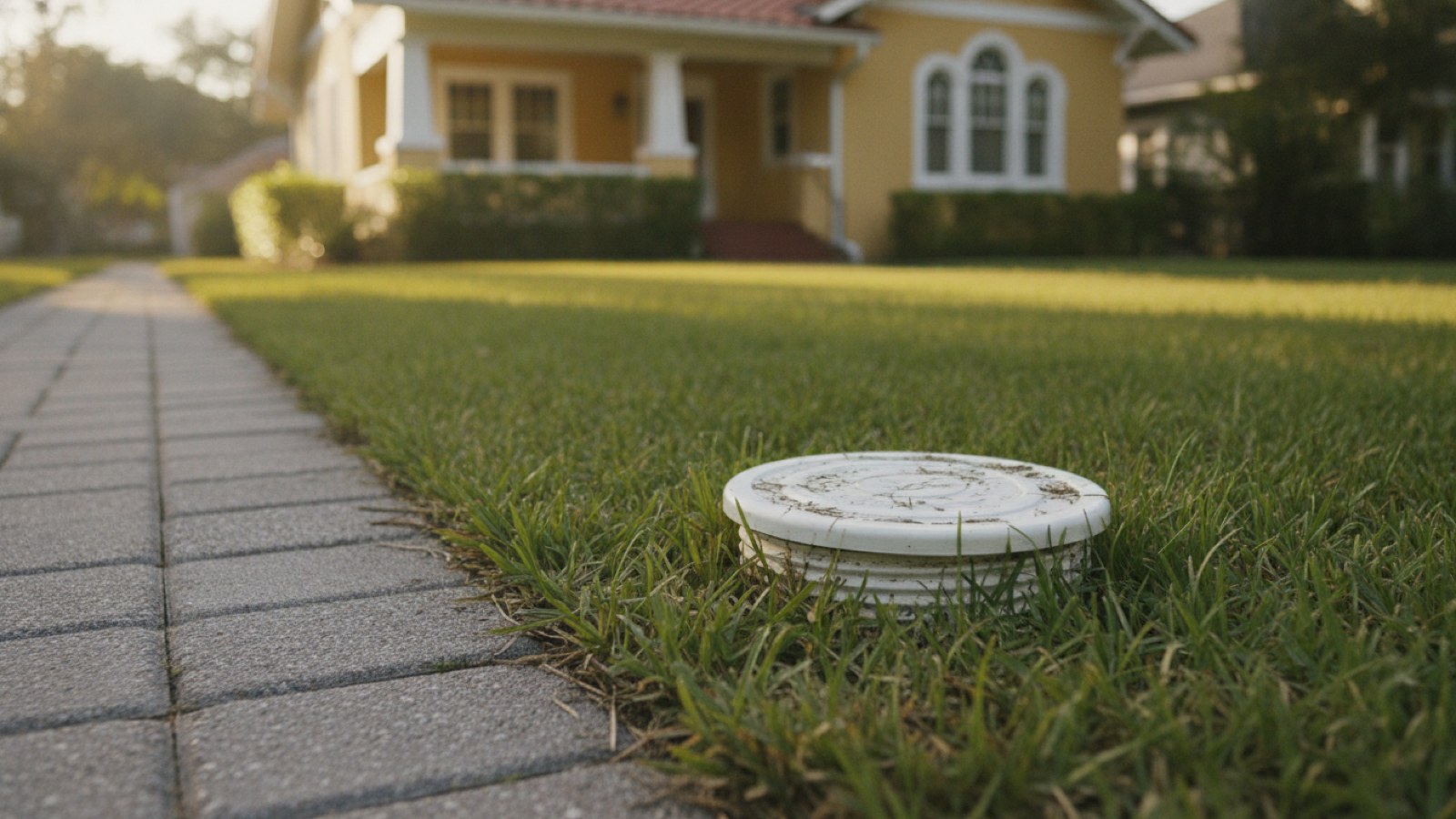
The sewer cleanout installation cost in Tampa Bay depends more on excavation and surface repair than on the cleanout fitting. A shallow lateral under sod is simpler to reach than a deep pipe beneath pavers, a driveway extension, or concrete. For permitted work inside Tampa city limits, the listed residential trade permit is $120 plus the Florida Building Permit Surcharge. The installation itself still needs a site-specific quote.
What does sewer cleanout installation cost in Tampa Bay?
The quote follows what must be located, opened, changed, and restored. A plumber must find the sewer lateral, expose it, add the cleanout connection, raise the capped riser to grade, and close the excavation.
A cleanout reached through open soil requires less restoration than one beneath hardscape. Pipe depth, nearby roots, and the condition of the exposed lateral also change the work. A cracked or offset section can turn an access project into a sewer line repair.
The City of Tampa fee schedule lists $120 for a residential Plumbing (general) permit. It lists the same $120 for residential Water/Wastewater On-Site Piping, so the fee is $120 either way this work gets classified.
The schedule also applies a Florida Building Permit Surcharge of 2.5% of the permit value or a $4 minimum. These figures apply inside Tampa city limits. Other Tampa Bay jurisdictions set their own fees, so confirm the current amount before budgeting.
What is a sewer cleanout, and where is yours?
A sewer cleanout is a capped riser that provides access to the underground sewer lateral. A plumber can use that opening for a cable, camera, or cleaning equipment without removing a toilet.
The City of Tampa says many homes have two cleanouts. One sits near the home’s foundation. The second is at or near the property line.
In a Seminole Heights bungalow, the foundation cleanout may be close to the cast iron building drain. Property-line access may be missing, buried, or hidden by a later driveway addition. A Seminole Heights plumber can trace the line when the cap isn’t visible.
Subdivision yards around Brandon, Valrico, and Seffner present a different problem. Sod, mulch beds, shrubs, and pavers can slowly cover access that was once easy to spot. A buried cap provides little help during a backup.
Why does the property-line cleanout decide who responds?
For City of Tampa wastewater customers, water inside the property-line cleanout points toward the City’s sewer line. The City’s blocked-drain instructions divide the response this way:
- If the foundation cleanout contains no water, the blockage is somewhere within the house plumbing.
- If the property-line cleanout contains water, the problem is likely in the City sewer. The City says to stop using the facilities and call 813-247-3451, its round-the-clock dispatch number.
- If there is no property-line cleanout and water is visible in a cleanout on the property, the City directs customers to call 813-898-1420 during normal business hours.
Read those last two together, because that is the part nobody writes down. With a property-line cleanout holding water, the City sends you to a line it staffs around the clock. Without one, the same sewage on your floor routes you to a business-hours desk. The cap in your yard is quietly deciding how fast the City moves.
Both of those numbers belong to the City of Tampa Wastewater Department, not to us.
The City also says its wastewater personnel aren’t permitted to work on private property. A homeowner or plumber must handle problems between the right-of-way and the house.
This procedure is limited to City of Tampa wastewater customers. Hillsborough County, Pinellas County, Pasco County, and individual cities follow their own utility procedures.
What does the Florida Plumbing Code require for permitted work?
For permitted plumbing work, the Florida Plumbing Code requirements for cleanouts make usable access part of the job. Section 708.1.3 requires a cleanout at the building drain and sewer junction, or within 10 feet upstream.
The same section says removing a water closet can’t be required for cleanout access. If a plumber must pull a toilet to reach the drain, that extra setup shows what missing access means during a service call.
Section 708.1.10 says required cleanouts can’t remain concealed. A below-grade cleanout must extend to grade, with the top of its plug at or above ground level. Sod or mulch over the cap defeats that access.
These rules govern permitted work. They don’t order every existing Tampa Bay homeowner to retrofit an older house. They explain why older plumbing can lack the access expected in current permitted work.
How does Pinellas County treat a missing cleanout cap?
Pinellas County Utilities can address a missing cleanout cap during its building permit process. Its Private Sewer Lateral Permitting Policy defines a cleanout as a pipe segment rising from the underground lateral to provide inspection and cleaning access.
The policy lists a missing necessary cleanout cap among conditions that make a lateral defective. It also places the related inspection, corrective work, and post-construction inspection costs on the property owner or applicant.
That policy applies within the Pinellas County Utilities wastewater service area. It isn’t a random countywide inspection program, and the policy doesn’t turn a missing cap into a fine.
Pinellas also publishes a private lateral rebate. Its stated scope covers lateral inspection, repair, replacement, or lining. It doesn’t state that the rebate pays for a new cleanout. Ask Pinellas directly whether a project involving both the lateral and a cleanout qualifies.
What actually drives the installation quote?
Excavation and restoration usually move the quote more than the cleanout fitting itself.
| Site condition | Effect on the quote | Why it matters |
|---|---|---|
| A shallow lateral beneath sod | Requires less excavation and restoration | The plumber can reach the pipe without opening hardscape. |
| A deep sewer lateral | Adds excavation work | More soil must be opened and replaced before the riser reaches grade. |
| Pavers, concrete, or a driveway above the pipe | Adds surface restoration | The finished surface must be opened carefully and rebuilt after installation. |
| An uncertain lateral route | Adds diagnostic work | A camera and locator may be needed before excavation begins. |
| Cracked, offset, or badly corroded pipe | Can expand the job into a repair | A cleanout fitting won’t correct damage in the surrounding lateral. |
| Tight access near walls or landscaping | Slows excavation and restoration | Crews have less room to reach the pipe and protect nearby surfaces. |
| Different permitting jurisdiction | Changes the official fee and process | Tampa, Pinellas, Pasco, and other jurisdictions publish their own requirements. |
An older Tampa Heights or Seminole Heights lateral may reveal weakened cast iron once exposed. In St. Petersburg’s Old Northeast, tight lots and later hardscape can make access the larger part of the job.
Watch for recurring backups, sewage odors, or several slow drains before treating this as an access-only project. Those can be signs of sewer line trouble that need diagnosis before a cleanout location is chosen.
How does a cleanout change future drain work?
A usable grade-level cleanout gives plumbers a direct route into the lateral. That reduces the time spent creating access during later cable cleaning, hydro-jetting, and camera inspections.
Our guide to how often sewer lines should be cleaned explains how accessible cleanouts affect routine service. The Tampa drain cleaning cost guide compares cable cleaning, jetting, and camera work without treating them as the same job.
A cleanout doesn’t repair a collapsed or offset lateral. It gives a drain cleaning plumber a better path for finding and reaching the obstruction.
Frequently asked questions
The practical answer usually depends on access, pipe condition, and the utility boundary.
Can a plumber quote a cleanout without digging?
A firm quote normally follows a site inspection and lateral location. When no riser is visible, a camera and electronic locator can help map the pipe before excavation begins. The surface above that location then determines what must be restored.
Is a cleanout required on an older Tampa Bay house?
Not simply because the house is old. The Florida Plumbing Code requirements apply to permitted work and don’t create a blanket retrofit order for existing homes. A licensed plumber can explain how the current cleanout rules apply to the work you’re planning.
Will the City of Tampa clear a blockage on my property?
No. The City says its wastewater personnel aren’t permitted to work on private property. A homeowner or plumber must resolve problems between the right-of-way and the house.
Does the Pinellas lateral rebate pay for cleanout installation?
The published rebate scope covers inspection, repair, replacement, or lining of a private sewer lateral. It doesn’t specifically include cleanout installation. Ask Pinellas County Utilities how it treats a project containing both types of work.
Is a sewer cleanout the same as a grinder pump?
No. A cleanout provides access to a sewer lateral, while a grinder pump moves wastewater through a low-pressure system. Our Tampa Bay grinder pump guide explains that separate ownership and maintenance question.
Does this apply to a Pasco County home on septic?
The City of Tampa property-line cleanout procedure doesn’t apply to a septic-served property. A septic home may have drain access points, but it doesn’t have the same municipal sewer boundary. For tank or drain field work, we’ll line you up with a licensed and registered septic contractor.
When to call us
Call when the cleanout is missing, buried, damaged, or a sewer backup keeps returning. We’ll match you with a licensed local plumber who can locate the lateral, explain the excavation and restoration work, and quote the job. Call us at (813) 590-0625.