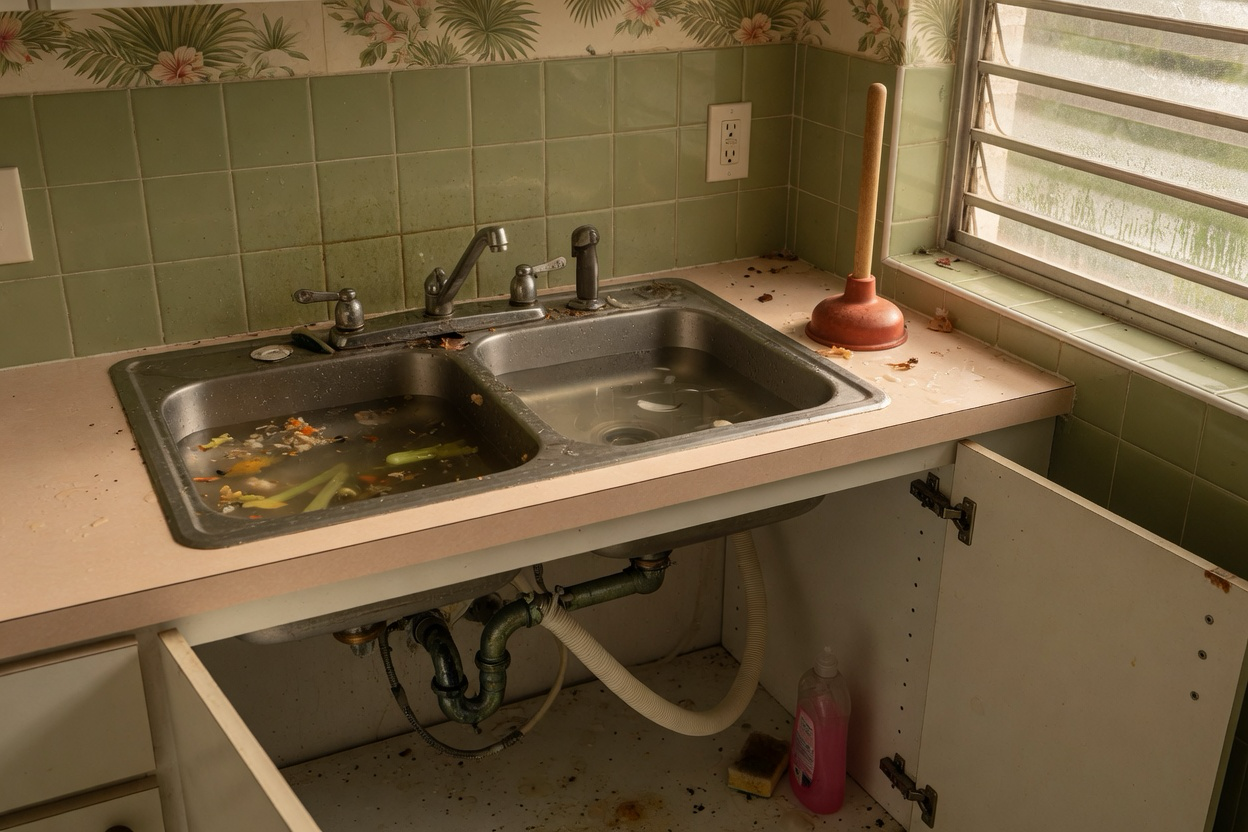
A clogged kitchen sink usually needs plunging, trap cleaning, or professional drain clearing. Stop running water, skip chemical cleaners, and check whether other nearby drains are slow.
Standing water means the blockage is already restricting the drain. Acting early can prevent an overflowing sink, leaking joints, and damage inside the cabinet.
Why is my kitchen sink clogged?
Most kitchen clogs begin with grease, food scraps, soap residue, or starch. These materials collect inside the drain and create a sticky coating. More debris catches on that coating until water can’t pass freely.
Grease is especially troublesome because it cools inside the pipe. Hot water may move it farther down the line without removing it. The grease then hardens in a less accessible section.
Coffee grounds, eggshells, rice, pasta, and fibrous vegetables can also cause trouble. Garbage disposals grind food into smaller pieces, but they don’t make that material disappear. Too much waste can overwhelm the trap or settle farther downstream.
Tampa Bay kitchens add two local problems. Grease plus hard-water scale coats the pipe wall until a normal load of scraps will not clear. In homes built before roughly 1975, that kitchen drain is often original cast iron, and fifty years of grease and scale leaves a pipe with a fraction of its original diameter. Recurring clogs can therefore point to a pipe condition, not just careless sink use.
What should I try before calling a plumber?
Start with the least invasive options. Remove visible debris from the drain opening, then let standing water drop if possible. Never reach into a garbage disposal, even when it appears switched off.
Safe steps include:
- Turn off the garbage disposal and disconnect its power before inspecting the opening.
- Use a sink plunger while sealing the other drain opening on a double-basin sink.
- Run the disposal only after restoring power and confirming the chamber is clear.
- Place a container beneath the trap before loosening any removable fittings.
- Stop if a fitting is corroded, stuck, leaking, or difficult to reassemble.
A plunger works by moving water pressure through the blockage. Firm, controlled strokes are more useful than splashing force. If water begins draining, flush the line with warm tap water.
The curved trap beneath the sink can hold food and grease. Homeowners comfortable with basic plumbing may remove and clean an accessible slip-joint trap. Take care with older metal piping because disturbed joints can begin leaking.
Avoid caustic drain chemicals. They may remain trapped behind the clog, damage certain materials, and expose anyone opening the pipe later. Mechanical drain cleaning addresses the obstruction directly.
How can I tell where the blockage is?
The affected fixtures offer useful clues. If only one sink basin backs up, the obstruction may be near that drain opening or disposal. If both basins fill, the shared trap or branch drain is more likely involved.
Water rising in the opposite basin during disposal use often indicates restricted flow after the two drains meet. A dishwasher discharge can also push water into the sink when that shared path is blocked.
Check nearby fixtures without repeatedly flooding the line. A clog in the P-trap stays local: only that sink is slow, and cleaning the trap restores flow. A clog behind the wall is a different job. Other fixtures gurgling, a dishwasher pushing water back into the sink, or damp drywall along the kitchen drain run all point past the trap into the branch or the line in the wall. Widespread backups deserve faster attention because wastewater may escape through the lowest available opening.
When does a clogged sink need professional service?
Call a plumber when plunging doesn’t restore normal drainage, the clog returns, or water leaks beneath the sink. A professional can inspect the trap, disposal connection, branch line, and accessible piping without guessing.
The licensed plumbers we send can choose equipment suited to the pipe’s condition. That may involve mechanical cleaning or a camera inspection when repeated trouble suggests damage farther along the line.
Odors, dark residue, and frequent gurgling also justify an inspection. These symptoms may indicate accumulated organic material, poor venting, or restricted drainage. If wastewater is spilling or several fixtures are backing up, request emergency plumbing help instead of continuing to run water.
Tampa Plumbing Pro serves homeowners across Hillsborough, Pinellas, and Pasco counties. We’re a referral service that matches customers with licensed plumbers rather than acting as the contractor.
How do I prevent another kitchen sink clog?
Keep grease, oil, food scraps, and fibrous waste out of the drain. Wipe greasy pans before washing them and use a drain strainer to catch solids.
Feed disposal-safe scraps gradually while running cool water. Continue the water briefly after grinding stops so loose material moves through the trap.
Pay attention to slow drainage. An early restriction is easier to address than a sink filled with dirty water. If recurring clogs accompany damp cabinets or unexplained moisture, professional leak detection can help separate a drainage problem from a leaking connection.
Frequently asked questions
Can I pour boiling water into a clogged kitchen sink?
No, boiling water isn’t a dependable fix for a kitchen sink clog. It can soften grease temporarily and move it deeper, while extreme heat may stress some piping or sink materials. Warm tap water is safer after normal flow returns.
Will baking soda and vinegar clear the clog?
Usually not if the drain is fully blocked. The reaction may loosen light residue near the opening, but it lacks the mechanical force needed for compacted grease or food. A plunger or proper drain-cleaning tool is more effective.
Why does my sink back up when the garbage disposal runs?
The drain path after the disposal is likely restricted. The disposal pushes water and ground material toward the blockage, forcing water into the adjoining basin or back through the opening. Stop using it until the line drains properly.
Why does my kitchen sink keep clogging?
Recurring clogs usually mean buildup remains inside the pipe or the drain has another defect. Rough pipe walls, poor slope, a restricted branch line, or disposal habits can all contribute. Inspection helps identify the actual cause.
Is a clogged kitchen sink an emergency?
It can be if wastewater is overflowing, leaking into cabinetry, or backing up through other fixtures. Stop using connected drains and arrange prompt service. A contained clog affecting only the kitchen sink is usually less urgent but still needs attention.
For help with a kitchen sink clogged in Tampa Bay, call Tampa Plumbing Pro at (813) 590-0625.