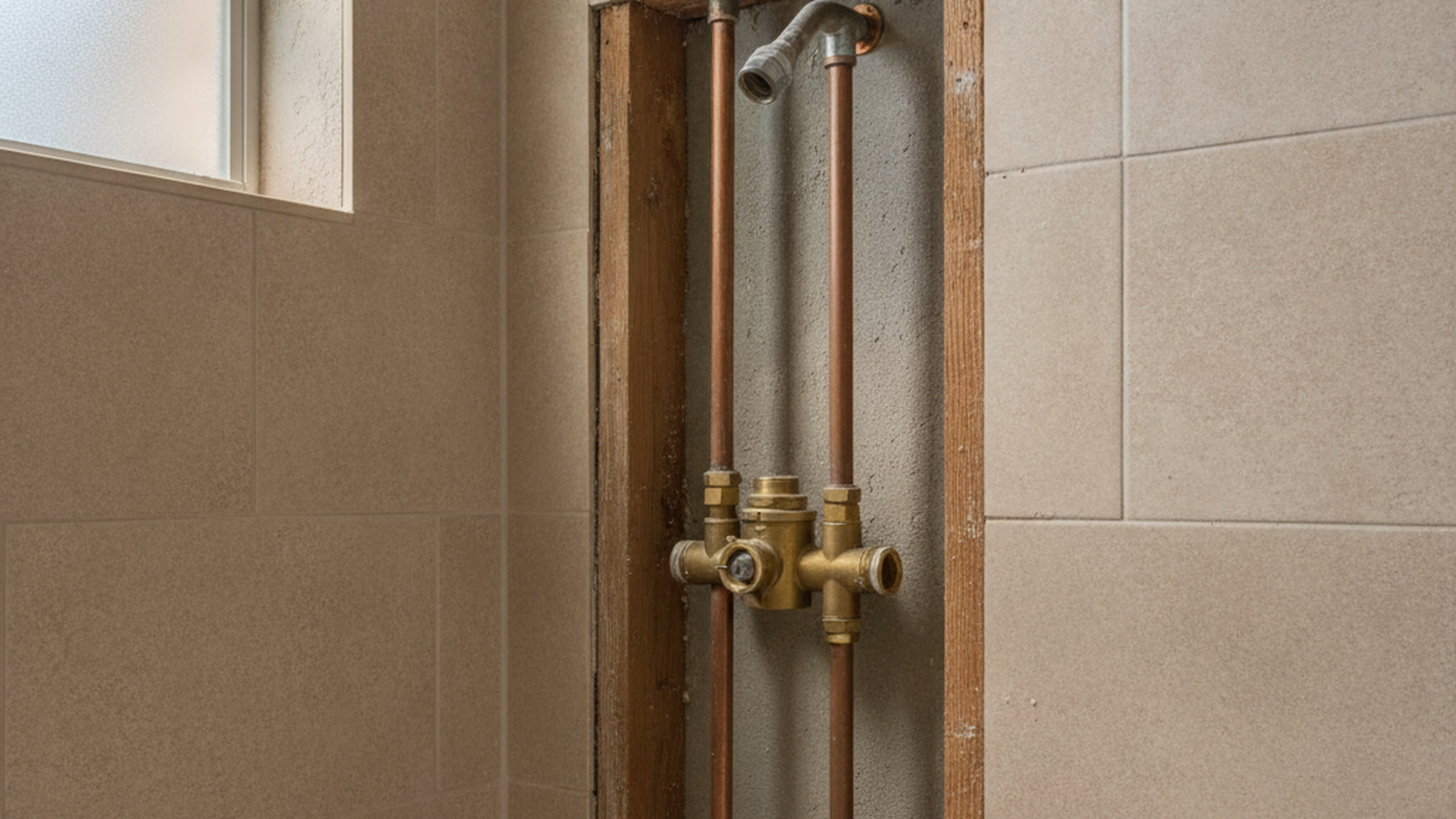
The shower valve replacement cost in Tampa Bay splits at one code-defined line: repairing the valve already in the wall, or replacing it with a valve that meets the current standard. The price fork starts with which job is being quoted, not a plumber’s hourly rate.
A cartridge repair can leave the existing valve body untouched. A replacement removes that body and may involve tile, drywall, piping, trim, a permit, and finish repairs. Those aren’t two prices for the same work. They’re different jobs hiding behind similar descriptions.
What does shower valve replacement cost in Tampa Bay?
The cost turns first on whether the plumber repairs the valve you already have or takes the body out. After that, access and finish work decide how far the replacement side grows.
A cartridge, seal, or stem sits inside the valve body. Swapping one can stop a drip or bring temperature control back without touching the plumbing behind the wall. The body stays right where it is.
Replacing the body reaches deeper. The plumber disconnects the old valve, fits the new one, and reconnects the supply and shower piping. If there’s a rear access panel, that’s straightforward. If it’s a tiled wall with nothing behind it, someone has to open the finished surface and put it back.
That’s why a quote written off “the shower won’t stop dripping” can look nothing like a quote written after somebody actually saw the valve body.
| Part of the job | Repairing the existing valve | Replacing the valve body |
|---|---|---|
| Plumbing scope | The existing body remains while an internal part is serviced. | The old body comes out and a new valve connects to the piping. |
| Wall access | Existing trim may provide enough access. | The plumber may need an access panel or a controlled wall opening. |
| Valve standard | The repair keeps the installed valve in place. | The valve being installed must meet the current residential standard. |
| Finish work | Tile and drywall may remain untouched. | Tile, drywall, trim, or paint may need restoration. |
| Quote structure | The quote should identify the internal part being repaired. | The quote should separate plumbing, access, finish work, and permit allowances. |
Start with a diagnosis, not a trim-kit selection. The plumbers handling faucet and fixture installation need to identify the valve body, the failed part, and the available access before pricing the right job.
What kind of shower valve does Florida require?
Florida’s residential code requires an installed shower or combination tub/shower valve to meet a named pressure or temperature-control standard. This requirement applies to one-family homes, two-family homes, and townhouses covered by the residential code.
Section P2708.4 of the Florida Building Code, Residential, 8th Edition says:
“Individual shower and tub/shower combination valves shall be balanced-pressure, thermostatic or combination balanced-pressure/thermostatic valves that conform to the requirements of ASSE 1016/ASME 112.1016/CSA B125.16 or ASME A112.18.1/CSA B125.1.”
A balanced-pressure valve reacts to pressure swings between the hot and cold supplies. A thermostatic valve reacts to temperature. A combination valve watches both.
The same section adds two more requirements. “Shower control valves shall be rated for the flow rate of the installed shower head.” And, “Such valves shall be installed at the point of use.”
So the valve, the shower head, and the trim aren’t three separate shopping decisions. A good quote names a valve and trim that work together, which matters most when nobody knows what brand or model went in originally.
One thing this standard doesn’t do is reach backward. It governs a valve being installed. It doesn’t make the valve already in your wall illegal, and it isn’t a retrofit order.
Why is 120°F the number that matters?
The installed valve must include an adjustable maximum setting that limits delivered water temperature to 120°F. That setting is adjusted at the shower after installation.
Section P2708.4 requires the valve to be “equipped with a means to limit the maximum setting of the valve to 120°F (49°C), which shall be field adjusted in accordance with the manufacturer’s instructions to provide water at a temperature not to exceed 120°F (49°C)”.
The field adjustment is the part people miss. Fitting the valve body isn’t the last step, because the installer still has to set that limit at your bathroom, using the manufacturer’s procedure for the valve that just went in.
An extra thermostatic device installed somewhere in the piping isn’t a substitute. The same section says, “In-line thermostatic valves shall not be utilized for compliance with this section.”
Temperature changes can also begin outside the shower. A failing pressure regulator or another supply problem deserves separate diagnosis. Our guide to high water pressure in Tampa explains the pressure side without confusing it with the shower valve itself.
Is a tub-only valve the same job?
No. A tub-only valve follows a different device standard, unless it’s part of a combination tub/shower valve. So the fixture you have changes what belongs in the quote.
Section P2713.3 says:
“Bathtubs and whirlpool bathtub valves shall have or be supplied by a water-temperature-limiting device that conforms to ASSE 1070/ASME A112.1070/CSA B125.70, except where such valves are combination tub/shower valves in accordance with Section P2708.4”
Read that carefully and it loops back on itself. A combination tub/shower valve lands under the shower-control requirements again. A tub on its own takes the separate temperature-limiting route.
That distinction earns its keep in older Tampa Bay bathrooms, where a tub spout, a shower riser, and the trim have often been changed at three different times by three different people. Somebody has to sort out what’s actually there before parts get ordered.
Does a shower valve replacement need a permit in Tampa Bay?
The code draws a boundary between repairing a valve and replacing one, but the local building department decides the permit path for the address. No single answer should be projected across Tampa, unincorporated Hillsborough, Pinellas, and Pasco.
The work-exemption list in Section 105.2 of the Florida Building Code, Building, 8th Edition begins with this warning:
“Exemptions from permit requirements of this code shall not be deemed to grant authorization for any work to be done in any manner in violation of the provisions of this code.”
Its plumbing exemption covers:
“The clearing of stoppages or the repairing of leaks in pipes, valves or fixtures and the removal and reinstallation of water closets, provided such repairs do not involve or require the replacement or rearrangement of valves, pipes or fixtures.”
Read the two halves of that sentence together, because separately they don’t tell you anything. The first half puts repairing your valve inside the exemption. The second half, the proviso, pulls the job right back out the moment the valve gets replaced instead of repaired. That’s the line your two quotes are sitting on either side of, and it’s the reason they don’t match.
Once the work crosses that line, confirm the permit path with the building department that covers the property. Don’t assume City of Tampa procedures apply to an unincorporated Hillsborough address, or to a home across the bay.
The City of Tampa Trade Permit Fee Schedule lists its residential plumbing-general permit at $120. The schedule also states that “All permits are subject to the Florida Building Permit Surcharge (2.5% of permit value or $4.00 minimum)”. Those figures apply inside Tampa city limits, and they’re the permit line only, not what the job costs.
The Hillsborough County Building Permit Fee Schedule lists residential plumbing-general work at $130. That county figure shouldn’t be applied to Tampa, Pinellas, Pasco, or another local jurisdiction.
Our Tampa water-heater permit guide explains the wider permit framework. It also keeps the owner-builder and state-law details from overwhelming this valve decision.
Why do Tampa Bay valves fail early?
Tampa Bay’s hard water leaves mineral scale inside cartridges, ports, and sealing surfaces. Hardness across this metro runs 11 to 17 grains per gallon, and a shower valve feels that every day it’s used.
Scale makes a cartridge stiff, narrows small passages, and keeps a sealing surface from closing cleanly. That’s why a Brandon shower can keep dripping right after a cartridge change. The new part is fine; the body it’s sitting in isn’t.
Ceramic disc cartridges hold up better in water this hard, which is why they’re what the pros we send recommend for fixture work. They aren’t immune, though, and debris or mineral deposits still get between the sealing surfaces. Our common Tampa Bay plumbing repairs guide explains why a faucet that drips after a fresh cartridge or washer usually has scale inside the valve.
Water treatment addresses the mineral side of the problem. A water softener service can address hardness throughout the home, while the Tampa Bay water-softener guide explains where treatment fits and where it doesn’t.
Not every stain around a shower opening comes from the valve body. Water can travel behind trim or along piping before appearing at the wall. Leak detection service helps separate a valve leak from another concealed source before tile is opened.
What should a homeowner ask before accepting a quote?
Ask what failed, how they’re getting to it, what valve is going in, and who’s fixing the wall afterward. The word “replace” on its own doesn’t tell you any of that.
- The scope should state whether the existing valve body stays or comes out.
- The valve description should identify its control type and compatible trim.
- The access plan should name the wall surface that may be opened.
- The quote should assign responsibility for tile, drywall, paint, and trim restoration.
- The permit allowance should be separated and tied to the correct jurisdiction.
- The final scope should include field adjustment of the temperature limit.
Photos of the trim and the wall behind the shower help a plumber come prepared. They can’t show every connection inside the wall, so treat them as a head start, not a diagnosis.
An older bathroom in South Tampa can carry three generations of trim over one original valve body. Sorting that out first is what keeps a cartridge quote from turning into a valve-body replacement halfway through the morning.
Frequently asked questions
Can a shower cartridge be replaced without opening the wall?
Often, the cartridge comes out through the trim opening while the valve body remains installed. Corrosion, scale, damaged threads, or an unavailable cartridge can move the job toward valve-body replacement.
Does every existing shower valve need a 120°F retrofit?
No blanket retrofit requirement appears in the code sections discussed here. The 120°F maximum-setting requirement applies to shower control valves being installed under the current residential standard.
Does the repair exemption cover a new valve body?
The exemption covers repairing a leak only when the work doesn’t replace or rearrange valves, pipes, or fixtures. Replacing the valve body crosses that stated boundary, so confirm the permit path locally.
Why does a shower still drip after cartridge replacement?
Scale or damage inside the valve body can prevent the new cartridge from sealing. Tampa Bay’s hard water makes the body’s internal condition part of a sound diagnosis.
What should two shower valve quotes have in common?
Both should identify repair versus replacement, the valve standard, wall access, finish restoration, and permit handling. Without those details, the totals may describe different jobs.
When to call us
Call when the shower won’t shut off, temperature control has changed, or water is reaching the wall. Tampa Plumbing Pro covers Hillsborough, Pinellas and Pasco and answers the phone 24 hours a day. We’ll match you with a licensed local plumber. Call us at (813) 590-0625.
Sources: Florida Building Code, Residential, 8th Edition, Florida Building Code, Building, 8th Edition, City of Tampa Trade Permit Fee Schedule, Hillsborough County Building Permit Fee Schedule