Every plumbing company in Tampa Bay handles the same short list of repairs on repeat: a toilet that won’t stop running, a sewer line that backs up every few months, a faucet that drips no matter how many times someone tightens it. None of these are exotic problems. What makes them different here is how fast they show up and how often they come back, thanks to a combination of hard water, sandy shifting soil, and a housing stock where a meaningful share of homes are pushing 50, 60, even 70 years old.
Why Tampa Bay repairs differently than other markets
Water hardness across Hillsborough, Pinellas, and Pasco counties runs 11 to 17 grains per gallon depending on season and source, solidly in “very hard” territory. That mineral load coats the inside of fixtures, valves, and pipe walls faster than it would in a market with softer water, which is why a flapper or fill valve that might last 7 to 10 years elsewhere often needs replacing every 3 to 5 years here. Add slab-on-grade construction, which puts most supply lines under concrete instead of in an accessible crawlspace, and sandy soil that shifts more than clay does in other parts of the country, and repairs that would be a quick fix elsewhere sometimes turn into a bigger diagnostic job.
Then there’s the age of the housing stock itself. Neighborhoods like Seminole Heights, Hyde Park, Tampa Heights, and Ybor City, along with St. Petersburg’s Old Northeast and Roser Park, are full of homes built between the 1920s and 1960s still running on original cast iron drain lines. Homes built between 1978 and 1995 in Carrollwood, Town ‘n’ Country, and New Tampa often carry polybutylene supply pipe, a material that fails from the inside without warning. Both situations mean more repair calls, and more of those calls turning into bigger conversations about whether a repair or a full replacement makes sense.
The repairs we get called for most often
Running or weak-flushing toilets. This is the single most common call. A flapper that won’t seal or a fill valve that won’t shut off wastes water around the clock and shows up on the water bill before anyone notices the sound. If that’s the sign you’re chasing, start with the two-hour meter test in our guide to a high water bill in Tampa Bay. Hard water mineral buildup on these small rubber and plastic parts is almost always the reason they fail here faster than the manufacturer’s expected lifespan. A full toilet repair usually means replacing the failing internal part, and it’s rarely more complicated than that unless the porcelain itself is cracked or the toilet rocks at the base, which points to a failed wax ring or a damaged flange underneath.
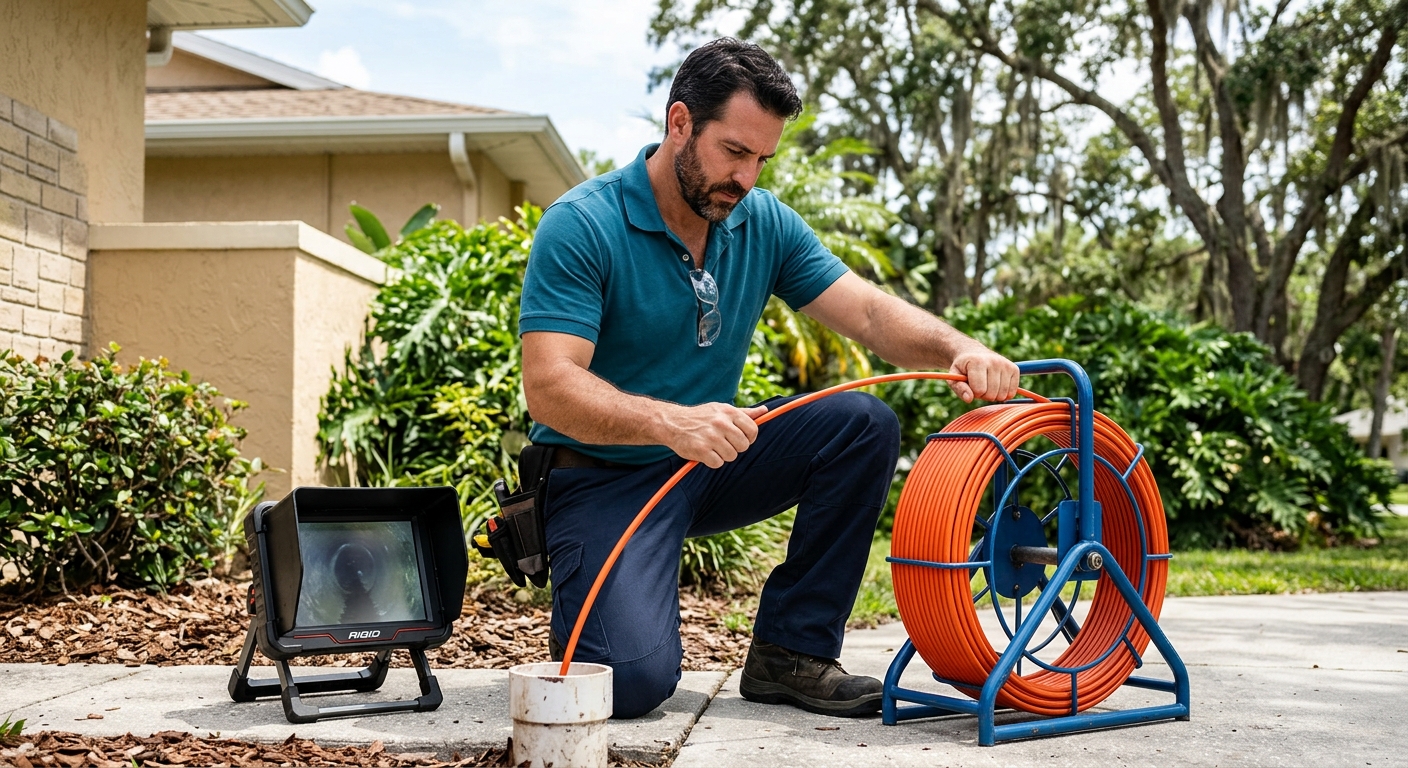
Sewer line backups and recurring clogs. If a drain clears with a snake and then clogs again within a few weeks, the real problem usually isn’t the clog itself, it’s what’s causing it. In the oak-canopy neighborhoods around Palma Ceia, Hyde Park, and Safety Harbor, root intrusion into an aging clay or cast-iron joint is close to a certainty once a line passes 40 or 50 years old. Sandy soil also lets sections of pipe settle into low spots, called bellies, where waste pools instead of draining and clogs keep forming in the same place. A proper sewer line repair starts with a camera inspection so the actual condition of the line, not just the symptom, drives the recommendation.
Dripping faucets and failing fixtures. A faucet that drips constantly, even after a fresh cartridge or washer, is usually hard water scale building up faster than expected inside the valve. Ceramic disc cartridges hold up noticeably better against Tampa Bay’s water than older washer-style faucets, which is part of why a repair sometimes turns into a recommendation to upgrade the fixture instead of patching it again. See our full faucet repair guide for how to tell which part is actually failing before buying parts.
Slab leaks and hidden pipe failures. These are less frequent than the calls above but far more disruptive when they happen. A warm patch on the floor, a water bill that jumps with no explanation, or the sound of running water when every fixture is off usually means a supply line under the slab has developed a pinhole leak, most often in a home running original copper or galvanized pipe past 25 or 30 years old. When the leak is in exposed pipe instead of under the slab, our guide to a pinhole leak in copper pipe covers the repair-or-repipe call.
Dollar ranges for these jobs live on plumbing repair cost in Tampa. This page is about why the same repairs keep coming back here, not a second copy of that table.
When a repair stops making sense
Not every problem is worth fixing again. A toilet that’s already had its flapper and fill valve replaced twice in two years, on original 1960s porcelain, usually costs less to replace outright than to keep patching, and a pre-1994 fixture like that sits in the top tier for a Tampa Bay toilet rebate. A sewer line where the camera shows corrosion or root intrusion running through most of its length, rather than one isolated joint, is a case where a targeted repair just delays the same call six months later. The honest version of this conversation is straightforward: if a camera inspection or a repeat failure pattern shows the underlying material is at the end of its life, repair becomes the more expensive option over time, not the cheaper one.
Getting the repair done right the first time
Tampa Bay’s plumbing challenges are specific enough that local experience matters more than it might in a market with simpler housing stock and softer water. A crew that’s worked cast iron and clay lines in Seminole Heights, polybutylene in Carrollwood, and slab construction across the whole metro recognizes the pattern the moment they see the home’s age and neighborhood, instead of treating every job as a blank slate.
Before any repair starts, especially anything beyond a basic fixture swap, ask for a written estimate that separates diagnosis, labor, and parts. For bigger jobs like a sewer line repair or a repipe, confirm the crew doing the work carries current Florida licensing, and verify it yourself at myfloridalicense.com rather than taking a truck decal’s word for it. It takes a few minutes and it’s the easiest way to know who’s actually going to be working in your home.
How much does a plumbing repair cost in Tampa Bay?
It depends on what’s failing. See plumbing repair cost in Tampa for the published toilet, faucet, and sewer bands. Getting a written, itemized quote before work starts is the only way to know which end of that range applies to your situation.
Why do older Tampa Bay homes need plumbing repairs so often?
A lot of it comes down to age and material. Homes built before 1960 in neighborhoods like Seminole Heights and St. Petersburg’s historic core often still run on original cast iron drain lines, and homes built between 1978 and 1995 across Carrollwood and Town ‘n’ Country frequently carry polybutylene supply pipe. Both materials fail more with age, and Tampa Bay’s hard water and shifting sandy soil speed that process up compared to other markets.
Is it worth repairing an old toilet, or should I just replace it?
If the toilet has already needed the same internal parts replaced more than once and it’s an original 1960s or 1970s unit, replacement usually costs less over a few years than repeated repairs. If it’s a newer toilet with one isolated failure, like a single flapper or fill valve going bad, a straightforward repair is almost always the right call.
How do I know if a clog is simple or a sign of a bigger sewer line problem?
A single clog that clears with a snake and doesn’t come back is usually just a clog. If the same drain backs up again within a few weeks, or if multiple fixtures back up at once, that pattern points to a structural issue further down the line, root intrusion, a cracked joint, or a bellied section, and it’s worth a camera inspection before paying to snake the same spot again.
Should I get more than one quote before a bigger repair?
For anything beyond a basic fixture repair, yes. A second quote is especially worth getting if a number comes in dramatically lower than others you’ve received, since that’s sometimes a sign of shortcuts on materials or scope. A camera inspection or clear diagnostic explanation should back up any bigger recommendation, not just a verbal estimate.
Call Tampa Plumbing Pro at (813) 590-0625 to get a straight answer on what’s actually failing and what it will take to fix it right.