When under-slab plumbing fails, water or wastewater escapes beneath your concrete foundation. That can cause high water use, damp floors, odors, drain trouble, soil erosion, and worsening property damage. A supply leak and a drain leak do not look the same, and they do not get opened the same way. For the warning signs before the slab is cut, see slab leak signs in Florida. For what a policy actually covers, see slab leak insurance in Florida.
| What failed | What you notice first | What gets worse if it sits |
|---|---|---|
| Supply line (pressurized) | Rising bill, running-water sound with fixtures off, warm floor | Soil washout under the slab, flooring damage, possible foundation movement |
| Drain or sewer line | Backups, slow fixtures, sewage odor when something drains | Wastewater in the soil, recurring clogs, contamination around the foundation |
Early on, the damage is a damp patch, an unexplained bill, or one slow fixture. Left alone, moisture spreads into flooring and cabinets, odors settle in, and soil can wash out from under the slab. This page does not put a dollar figure on that timeline.
What actually fails beneath a concrete slab?
Several types of plumbing may run beneath a Tampa Bay home’s slab. Pressurized supply lines carry clean water toward fixtures. Drain and sewer lines carry wastewater away using gravity.
A supply pipe can develop a pinhole, split, or failed connection. Because the line stays pressurized, water may escape continuously. A leaking hot-water line can create a warm area on tile or flooring.
Drain pipes fail differently. They may crack, separate, collapse, or develop an opening around a joint. Wastewater then escapes only while connected fixtures are draining. Soil can also enter the damaged pipe and restrict flow.
Older metal pipes may corrode from the inside or outside. Plastic piping can shift at connections if the surrounding soil moves. The problem is hidden, but its effects eventually appear elsewhere.
What happens after the pipe starts leaking?
Escaping water first saturates the material around the pipe. Florida’s sandy soils can wash away or shift as water continues moving. This may create unsupported spaces beneath part of the slab.
Moisture can then travel through cracks, joints, and porous concrete. Flooring may discolor, loosen, buckle, or develop a musty smell. Baseboards and nearby drywall can also absorb moisture.
A pressurized leak often increases water consumption even when household habits haven’t changed. You might hear running water with every fixture closed. The water meter may also show movement during a no-use test.
A failed drain line produces different symptoms. These include recurring backups, slow fixtures, sewage odors, or unusually damp ground near the foundation. If you suspect a hidden leak, professional leak detection can help locate it before flooring is opened.
Can an under-slab leak damage the foundation?
Yes, an under-slab leak can contribute to foundation damage. It doesn’t mean every hidden leak will crack or sink the slab.
Risk grows when escaping water carries soil away or repeatedly changes soil moisture. The slab may lose even support in the affected area. Existing cracks can widen, doors may begin sticking, or flooring may become uneven.
Those symptoms can have other causes, including normal settling or unrelated drainage problems. That’s why diagnosis matters. A plumber should confirm the pipe failure and its location. A foundation specialist may be appropriate if structural movement is visible.
Fast action can limit how much surrounding material becomes saturated. It also helps protect cabinets, flooring, walls, and belongings from secondary water damage.
How do plumbers find the failed pipe?
The process starts by separating supply problems from drain problems. A plumber may inspect the water meter, isolate fixtures, check water pressure, and listen for escaping water.
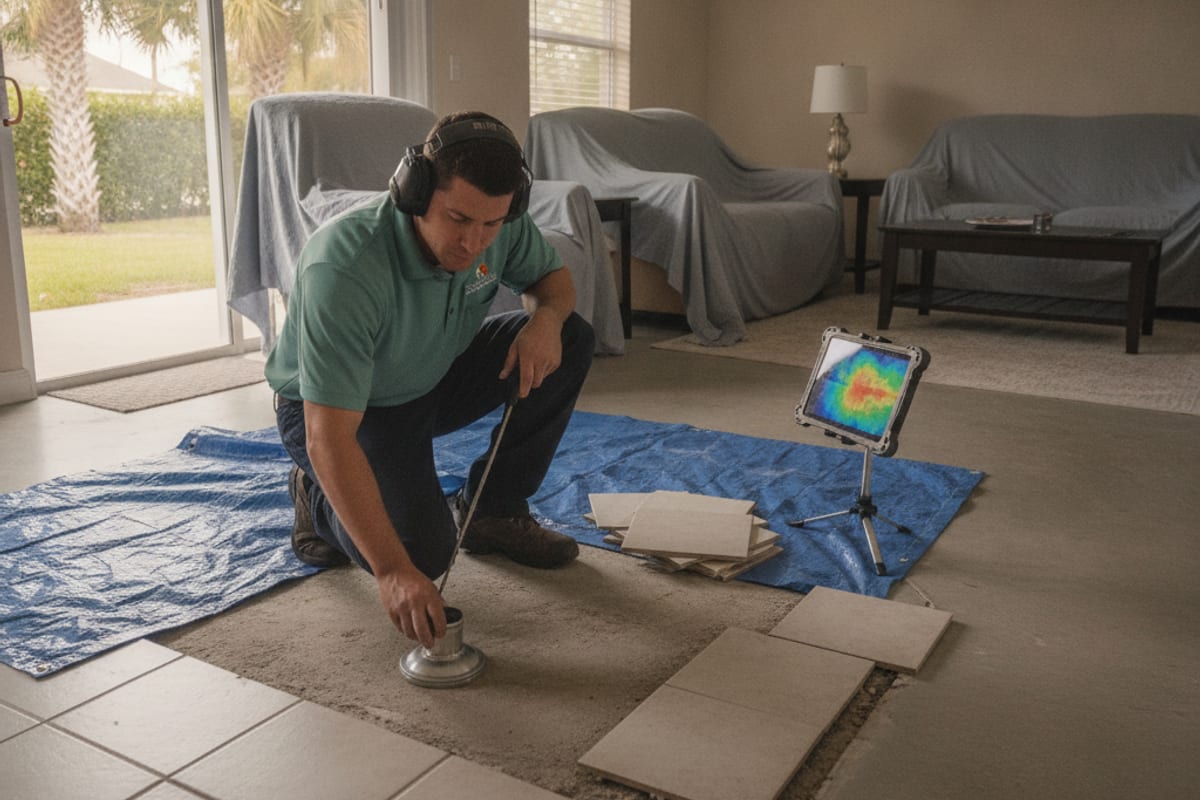
Thermal imaging can reveal temperature differences from a leaking hot-water line. Moisture readings help trace where water has traveled, though the wettest surface isn’t always directly above the break.
Drain failures may require a camera inspection through an accessible cleanout. The camera can reveal cracks, separated joints, roots, standing water, or a collapsed section. Location equipment helps estimate where that defect sits beneath the slab.
Testing should narrow the repair area before concrete is disturbed. The licensed plumbers we send can evaluate whether slab leak repair is appropriate for the confirmed failure.
Will the entire floor need to be opened?
Usually, the entire floor doesn’t need to be opened. The right access method depends on the pipe, location, flooring, and overall piping condition.
A small, accessible failure may be repaired through a targeted opening. The plumber removes flooring and concrete above the damaged section, completes the repair, and prepares the opening for restoration.
Another option is rerouting the affected line through walls or the attic. This avoids returning the replacement line beneath the slab. It may be practical when access from above would damage expensive finishes.
Widespread deterioration can make repeated spot repairs a poor long-term choice. In that situation, a broader home repiping evaluation can determine whether bypassing vulnerable lines makes more sense.
Drain repairs may involve direct excavation or a method performed through existing access points. Pipe condition, slope, location, and access determine what’s workable.
What should I do when I suspect a failure?
Start by checking for active water damage. If clean water is spreading, close the home’s main shutoff valve if you can do so safely. Move belongings away from wet areas.
Don’t break the slab based only on a warm tile or damp spot. Water can travel beneath concrete and surface far from the actual failure. Unnecessary demolition adds cost and may miss the pipe.
Avoid using fixtures connected to a suspected broken drain. Wastewater can escape beneath the home each time those fixtures empty. Keep people and pets away from any sewage-contaminated area.
Document visible damage and arrange an inspection. Tell the plumber about recent water bills, recurring backups, noises, odors, warm flooring, and previous pipe repairs.
Frequently asked questions
Will water always come through the floor?
No, water won’t always appear above the slab. It may remain below the concrete, move toward an exterior wall, or follow gaps around pipes. A rising water bill may be the first clue.
How can I tell a supply leak from a drain failure?
Supply leaks often continue while fixtures are off. Drain failures usually become noticeable when sinks, toilets, tubs, or appliances discharge water. Proper testing is still needed to confirm the source.
Can a slab leak cause mold?
Yes, trapped moisture can support mold growth in nearby flooring, drywall, cabinets, or insulation. Concrete itself isn’t food for mold, but dust and building materials around it can be.
Can the pipe be fixed without breaking concrete?
Often, it can. A plumber may reroute a supply line or use an access-based drain repair method. The pipe’s location, condition, and layout determine which options are practical.
Is an under-slab plumbing failure an emergency?
It can be. Rapid water loss, sewage exposure, spreading moisture, or water near electrical equipment needs immediate attention. A small suspected leak still deserves prompt diagnosis before damage expands.
For help anywhere in Hillsborough, Pinellas, or Pasco County, call Tampa Plumbing Pro at (813) 590-0625 to get matched with a licensed plumber.