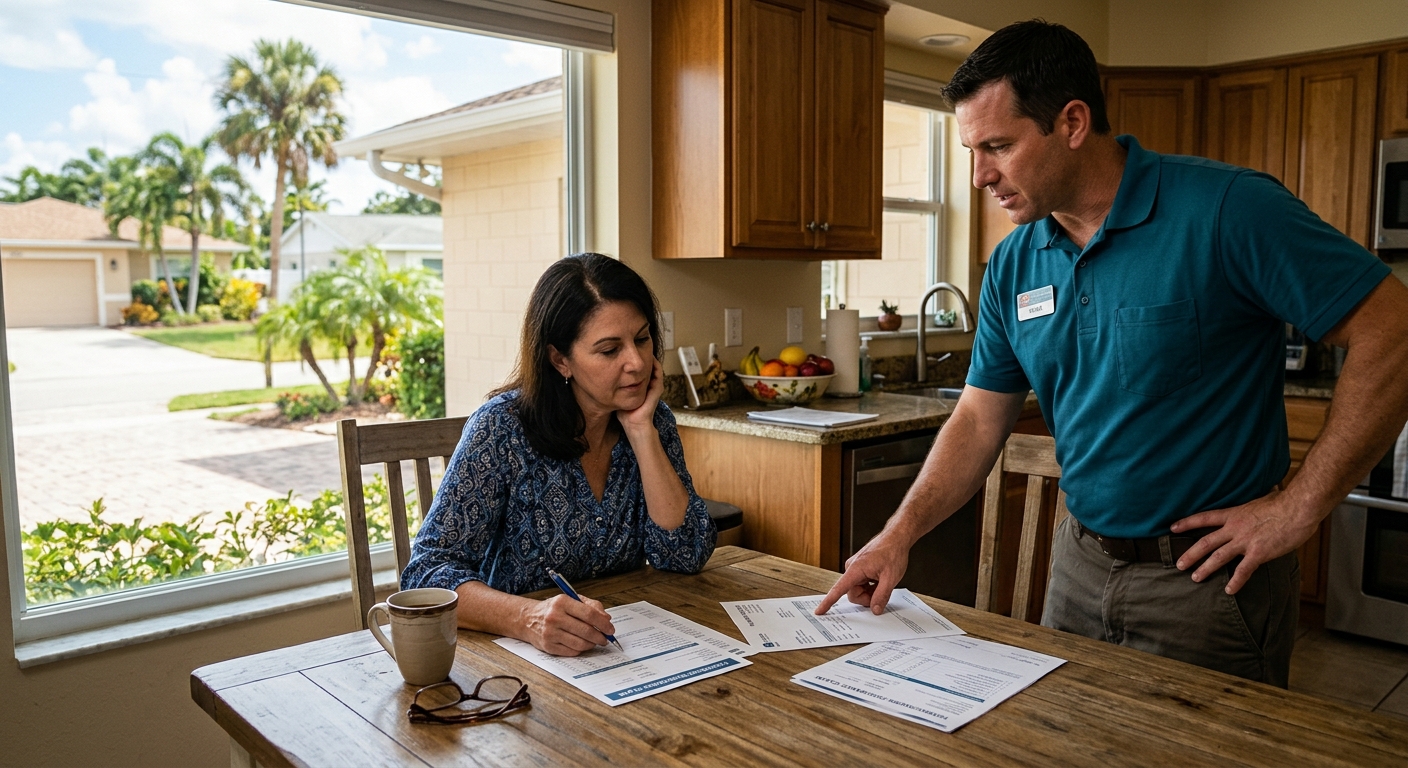
This is one of the first questions we get on almost every slab leak repair call, and the honest answer is: it depends, more than most homeowners expect. Florida insurers handle slab leaks differently than a burst pipe in a wall, and understanding why can save you from a denied claim or a fight with your adjuster later.
The distinction that decides everything
Most Florida homeowners policies cover sudden and accidental water damage. If a slab leak causes water damage to your flooring, drywall, or belongings, that damage portion is often covered, subject to your deductible. What most policies do not cover is the cost of the plumbing repair itself, meaning locating and fixing the actual leaking pipe. Insurers generally treat that as a maintenance responsibility, not a covered peril, the same way they would not cover replacing an old water heater that simply wore out.
This split trips people up constantly. A homeowner assumes the whole bill, plumbing plus flooring plus drywall, is covered because water damage happened, and then finds out the insurer is only writing a check for the damage restoration, not the pipe repair. Reading your specific policy’s water damage and “hidden pipe leak” language before you assume either way is worth the ten minutes it takes.
Why “sudden” versus “gradual” matters so much
Insurers draw a hard line between sudden, accidental damage and gradual, ongoing damage. A pipe that bursts suddenly and floods a room is a textbook covered event. A slab leak that has been slowly seeping for months, causing mold or foundation settling over time, often gets classified as gradual damage or a maintenance failure, which most standard policies exclude.
This is exactly why catching a slab leak early matters for your claim, not just your repair bill. A slab leak caught within days of the first sign, a warm spot, a water bill spike, the sound of running water with everything off, is far more likely to read as a sudden covered event than one that sat undetected for months and turned into visible mold or a cracked slab.
What documentation actually helps your claim
If you suspect a slab leak, the strongest thing you can do for a future claim is get professional leak detection documentation as soon as possible. A dated report showing when the leak was found, where it was located, and what caused it gives your insurer something concrete to evaluate, instead of a vague description after the fact. Photos of the water meter still spinning with everything off, the damaged flooring, and the repair itself all help build a clear timeline.
Keep every invoice separate: the detection cost, the plumbing repair cost, and any water damage restoration cost. Insurers process these as different line items, and a single combined bill makes it harder for an adjuster to determine what falls under your policy’s coverage.
What homeowners in older Tampa Bay homes should know
Homes with documented polybutylene pipe, common in construction from 1978 to 1995 across Carrollwood, Town ‘n’ Country, and New Tampa, sometimes face extra scrutiny on plumbing-related claims, since some insurers treat poly-b as a known, pre-existing risk rather than a sudden failure. If your home falls in that build window and you have not had a plumbing inspection recently, it is worth doing one proactively, both for your own planning and to have documentation on file before you ever need to file a claim. It also tells you what the plumbing section of a 4-point inspection will record when your insurer asks for one.
Does homeowners insurance cover slab leak repair in Florida?
Usually not the plumbing repair itself. Most policies cover resulting water damage, flooring, drywall, and belongings, subject to your deductible, but treat locating and fixing the actual pipe as a homeowner maintenance cost rather than a covered peril.
What is the difference between sudden and gradual damage for insurance purposes?
Sudden damage happens quickly and unexpectedly, like a pipe bursting, and is typically covered. Gradual damage builds up slowly over weeks or months, like a slow slab leak that eventually causes visible mold, and is more likely to be excluded as a maintenance issue.
Will my insurance company send someone to inspect a suspected slab leak?
Some will, especially once a claim is filed, but you should not wait for your insurer to confirm a leak before calling a plumber. Getting your own professional detection and documentation first protects your timeline and gives you evidence regardless of how the claim goes.
What should I do if my slab leak claim gets denied?
Ask the insurer for the specific policy language they used to deny the claim, in writing. A denial based on “gradual damage” or “wear and tear” can sometimes be appealed if you have detection documentation showing the leak was recent and sudden rather than long-term. This is also where a second opinion from your own plumber, separate from anything the insurance company’s own inspector reports, can matter, since the two assessments do not always agree on how long a leak had been active.
Does filing a slab leak claim raise my insurance rates?
It can, particularly if you file more than one water-damage claim within a few years. Some homeowners choose to pay for the repair out of pocket when the amount is close to their deductible, specifically to avoid a claim history that could affect renewal or rates. That is a personal financial call worth making with full information, not a reason to delay a repair that is actively causing damage.
Get the documentation and the repair handled together
Call Tampa Plumbing Pro at (813) 590-0625 for professional slab leak detection with a clear, dated report you can bring to your insurer, whatever they end up covering. We will walk you through exactly what we find, give you separate line-item pricing for slab leak repair and detection, and point you toward what to ask your insurance company before you assume the answer either way.