A whole-home water softener installed in Tampa Bay runs $1,800 to $3,500 for a standard system on city water. Homes on well water needing iron or sulfur filtration ahead of the softener usually land at $2,500 to $4,500 instead. Ongoing salt costs run roughly $10 to $20 a month depending on household size and water use.
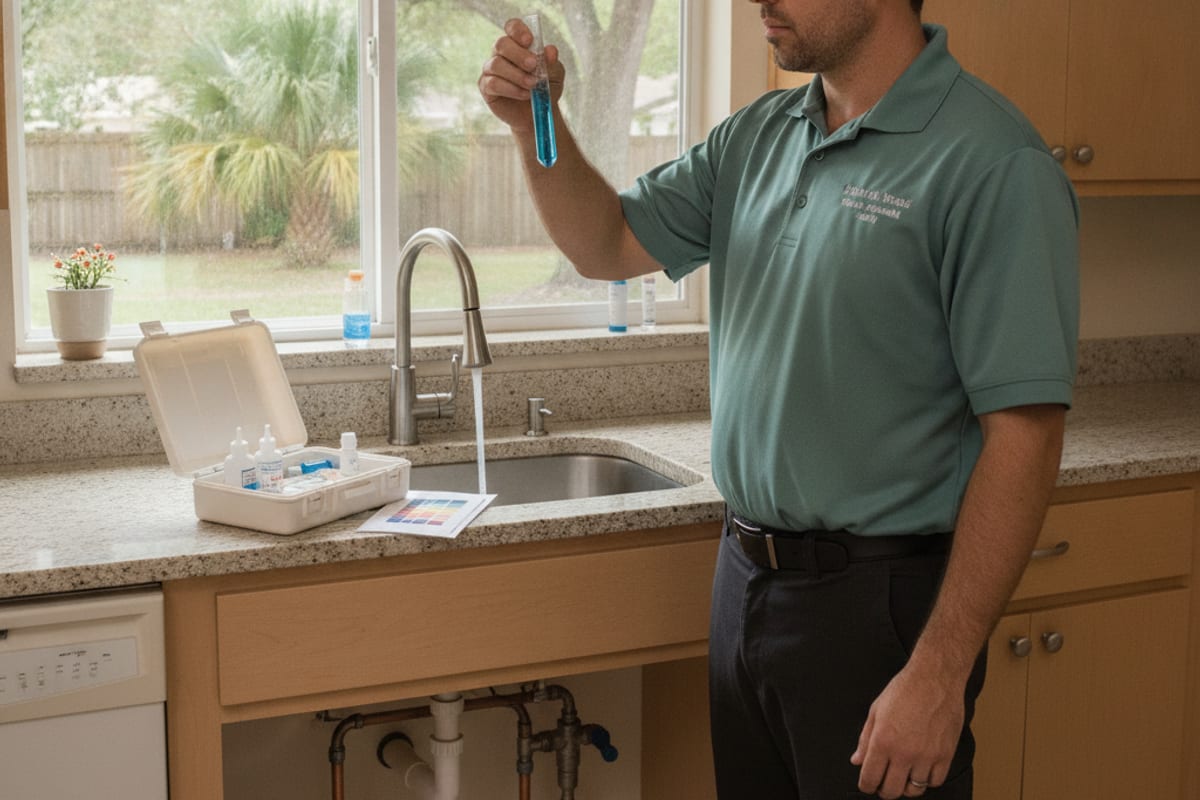
Tampa Plumbing Pro tests your actual water hardness on-site before quoting a system, and a standard whole-home install typically finishes in three to five hours.
What does a water softener cost in Tampa?
For a typical Tampa Bay single-family home on municipal water, a properly sized water softener runs $1,800 to $3,500 installed. Where you land in that range depends mostly on unit capacity, which is driven by your household’s daily water use and your actual measured hardness, not a generic metro average. A two-person household with moderate usage sits toward the lower end. A larger household running more loads of laundry, more dishwasher cycles, and more showers a day needs a higher-capacity unit, which costs more before labor is even added.
Why does well water cost more to treat?
Homes on private wells, common around Odessa, Land O’ Lakes, and rural Pasco, frequently test harder than Tampa’s already-hard municipal supply, and well water often carries iron or sulfur on top of that hardness. A softener alone doesn’t remove either one, and running iron- or sulfur-heavy water through a standard softener fouls the resin bed and shortens the unit’s working life. That’s why well-water systems usually need a sediment pre-filter and an iron or sulfur treatment stage ahead of the softener, which pushes the full installed cost to $2,500 to $4,500. Untreated iron and sediment add wear to well pump equipment too, so a full treatment train protects more than just the softener. Our breakdown of well water treatment in Pasco County covers what a full treatment train looks like when all three issues show up together.
What’s actually included in that installed price?
The quoted range covers the softener unit itself, the resin tank and brine tank, connection into your home’s main line, and setting the regeneration cycle to your actual household usage rather than a factory default. It also includes removing whatever plumbing modification is needed to tie the unit in, since every home’s main line access is a little different. It doesn’t include separate iron or sulfur filtration unless your water actually needs it, which is why we test first rather than quoting a flat number sight unseen. It does include running a drain line for the brine tank’s backwash discharge, a step some quotes leave out and then charge for separately once the unit is already on-site. It also doesn’t include a carbon filter for chlorine and chloramine taste, which is a different device solving a different problem: see water filter vs. water softener in a Tampa Bay home for which one your water actually needs.
Salt-based versus salt-free: does the cheaper option cost less overall?
Salt-free conditioners are sometimes priced lower than a comparable salt-based softener, and they don’t require ongoing salt purchases. But they don’t remove hardness the way a true softener does, they just alter the mineral structure so it’s less likely to stick to surfaces. In water as hard as Tampa Bay’s, typically 11 to 18 grains per gallon, a lot of homeowners who choose the cheaper salt-free option are disappointed with how little it slows scale buildup in a water heater or appliances. For genuinely hard water at this level, a salt-based system is usually the better value even with the ongoing salt cost factored in, because it actually solves the problem instead of managing it partially. Our full comparison of whether a softener is worth it in Tampa Bay goes deeper on how the two technologies actually perform here.
What does a water softener cost to run every month?
Beyond the installed price, ongoing costs are mostly salt, which most households refill every four to eight weeks depending on usage and hardness, running roughly $10 to $20 a month. A well-maintained softener needs very little else, though we recommend a check-up every year to confirm the resin bed and regeneration cycle are still performing the way they should, especially given Tampa Bay’s higher hardness levels. What that annual visit covers, and why the local disinfectant schedule changes the calculus here, is laid out in water softener maintenance in Tampa Bay.
Does household size change the price?
Yes, directly. Softener capacity is sized to grains of hardness removed per regeneration cycle, and a bigger household running more water through the system needs a higher-capacity unit to avoid regenerating too often, which burns through salt faster and wears the unit out sooner. An undersized unit for your household ends up costing more over time in salt and shortened lifespan than paying for the right size upfront.
Is the cost worth it compared to what hard water damages?
Hard water without a softener shows up as cost elsewhere even when nobody’s tracking it that way. A water heater that should last 8 to 12 years commonly fails in 5 to 7 here without one, which means an early water heater replacement bill that a softener would have delayed. Fixtures and faucets scale up and need replacing sooner. Appliances that use water lose efficiency and working life to the same mineral buildup. Weighed against a softener’s $1,800 to $3,500 installed cost and modest monthly upkeep, most homeowners who’ve already paid for one early water heater or appliance failure find the math straightforward the second time around. The comparison gets even clearer for homes replacing a second water heater in under a decade, since that’s a direct signal the first one never got a fair shot at its rated lifespan. Whichever installer you choose, confirm their CFC plumbing license at myfloridalicense.com before signing anything. It’s public record and takes only a minute.
Frequently asked questions
How much does a water softener cost installed in Tampa?
A standard whole-home system on municipal water runs $1,800 to $3,500 installed. Well-water homes needing additional iron or sulfur filtration ahead of the softener typically run $2,500 to $4,500.
Why do well-water homes pay more for a softener?
Well water in areas like Odessa and rural Pasco often carries iron or sulfur along with hardness, and treating those requires filtration stages ahead of the softener itself, or the added minerals foul the softener’s resin bed and shorten its life.
What’s the monthly cost of running a water softener?
Mostly salt, typically $10 to $20 a month depending on household size and water usage. Beyond keeping the brine tank stocked, a well-maintained unit needs very little ongoing spend.
Is a cheaper salt-free system a good way to save money?
Usually not in Tampa Bay’s water. Salt-free conditioners cost less upfront and skip the salt expense, but they don’t remove hardness the way a true softener does, and in water this hard, most homeowners see far less improvement than they expected.
Does a bigger house need a bigger, more expensive softener?
Yes. Softener capacity is matched to your household’s actual water use and measured hardness. A larger household needs a higher-capacity unit to avoid frequent regeneration, and that capacity is reflected directly in the installed price.
Does a water softener actually pay for itself?
For most Tampa Bay homes, yes, over a handful of years, mainly through extended water heater and appliance life plus less spent on soap and detergent to compensate for hard water’s poor lathering.
Get a real number for your home
We’ll test your actual water hardness on-site, not quote off the metro average, and give you a straight number for your specific house. Call Tampa Plumbing Pro at (813) 590-0625, serving Tampa and the rest of Hillsborough, Pinellas, and Pasco counties on both city water and private wells.