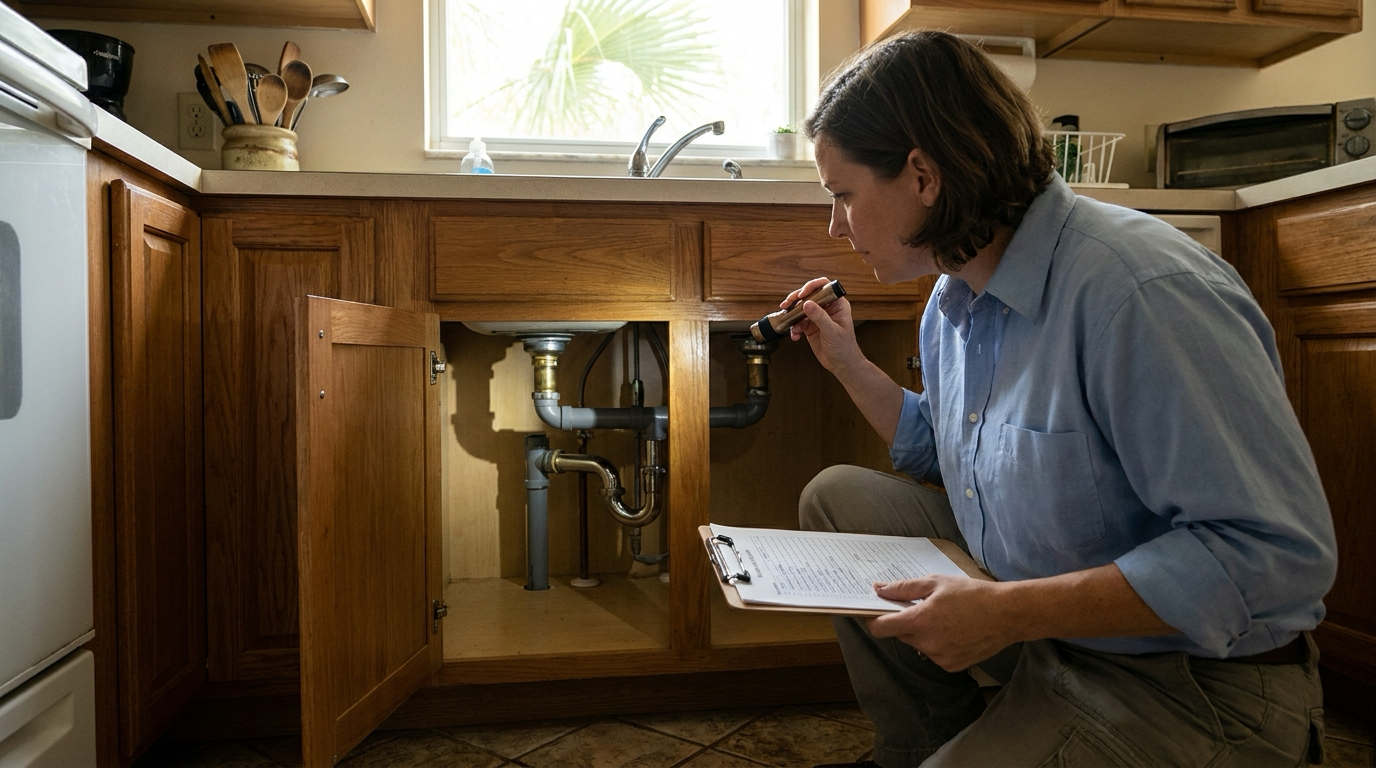
A 4-point inspection is the short report Florida insurers ask for before they’ll cover an older home. Citizens Property Insurance requires one for all property owner, dwelling and mobile home applications on properties more than 20 years old, and private carriers run their own versions of the same checklist. A Florida-licensed inspector documents the age, type and condition of four systems: the roof, the electrical, the heating and cooling, and the plumbing. In Tampa Bay, the plumbing section is where homes get flagged.
That’s not because local inspectors are picky. It’s because this metro’s housing stock carries three pipe materials that Florida insurers have learned to treat as claims waiting to happen: polybutylene from the 1978-1995 building boom, galvanized steel in the pre-1960s neighborhoods, and cast iron drain lines under the older bungalows. If your house has any of them, the inspection will say so, and what happens to your policy depends on what you do about it.
This post covers the plumbing quarter of the inspection: what the form actually asks, which materials fail it, and what’s worth fixing before the inspector shows up rather than after the carrier reads the report.
What is a 4-point inspection?
It’s a condition report on four systems, not a full home inspection. Citizens describes it as documentation of “the age, type and condition of the wiring, heating and plumbing systems, and roof,” completed by a Florida-licensed inspector. Photos have to accompany it, including a shot of every hazard or deficiency the inspector notes.
The purpose is underwriting, not advice. The insurer isn’t asking whether the house is a good buy. It’s asking whether the four systems most likely to generate a large claim are in good working order right now. A home inspection you got when you bought the house doesn’t substitute, and neither does a wind mitigation report, which measures hurricane resistance for premium credits rather than insurability.
The distinction matters because the two inspections often get booked together and homeowners mix them up. Wind mitigation can only save you money. A 4-point can cost you your policy.
When does Citizens require a 4-point inspection?
When the property is more than 20 years old. Citizens’ current guidance requires a 4-point inspection for all property owner, dwelling and mobile home applications past that age, which in this metro is most of the map. The urban core of Tampa, nearly all of St. Petersburg, and every polybutylene-era subdivision in between crossed the 20-year line long ago. Even the early Wesley Chapel and New Tampa waves are past it now.
If the application is for a mobile or manufactured home, the plumbing was built to a different standard, and what’s different about mobile home plumbing is worth reading before the inspector arrives.
Private carriers set their own thresholds, and most don’t publish them the way Citizens does. If you’re shopping coverage on any Tampa Bay home built before the mid-2000s, plan on someone asking for a 4-point before they bind the policy.
One more line from Citizens worth taking literally: serious hazards or deficiencies, “such as exposed wiring, active leaks or evidence of leaks,” should be repaired before an application for coverage is submitted. The instructions on the form itself go further, telling agents that properties with plumbing systems not in good working order cannot be submitted at all. An active leak doesn’t get you a higher premium. It gets you no application.
What does the plumbing section of a 4-point inspection check?
Four things: how old the system is, what the pipes are made of, whether it all works, and whether anything is leaking or has leaked before.
Citizens’ form asks for the age of the plumbing system and the year it was last updated. Then come the pipe-type checkboxes, which name copper, PVC, galvanized and polybutylene, with a line for anything else. Then a direct question: is the plumbing system in good working order, yes or no. Then a deficiencies list that includes an active leak, indication of prior leaks, connections or hoses leaking or cracked, and a line for the water heater, where an inspector notes age or condition problems.
Notice what that structure means. The material of your supply pipes is not a judgment call the inspector makes on a bad day. It’s a checkbox. A gray polybutylene line coming off the water heater or a corroded galvanized stub under a bathroom sink gets recorded because recording it is the job, and it gets photographed because deficiencies have to be. The underwriter reading the report a week later has never seen your house. The checkbox and the photo are your house.
Prior leak evidence deserves more respect than it usually gets. A water stain on the ceiling from a shower valve fixed three years ago reads as “indication of prior leak(s)” unless there’s paperwork showing the repair. If you’ve had plumbing work done, have the invoice ready for the inspector. A documented repair is a closed issue. An undocumented stain is an open one.
Which pipe materials flag a 4-point inspection in Florida?
Three matter in Tampa Bay, and the site covers each in depth already.
Polybutylene is the big one. It’s the gray plastic supply pipe installed across this metro between 1978 and 1995, it fails from the inside out as chlorine degrades it, and insurers treat it accordingly. How to identify it and why it fails is its own subject. What belongs in this post is the underwriting math. Citizens’ own FAQ says dwellings 20 years old or newer with polybutylene “may be eligible” if there are no signs of leaks or damage. Read that against the calendar. Polybutylene hasn’t been installed since the mid-1990s, so a poly home that is 20 years old or newer does not exist in 2026. Every real polybutylene house in Tampa Bay is over the threshold, gets the 4-point, and gets the checkbox. In practice, poly means a repipe conversation, either before the inspection or after the non-renewal notice.
Galvanized steel is the quiet one. Pre-1960s Tampa and St. Pete homes that never repiped still run supply water through steel pipe that rusts shut from the inside, and the same corrosion that kills your water pressure reads to an underwriter as a supply line near the end of its life. Galvanized doesn’t carry polybutylene’s lawsuit history, but it’s named on the same checkbox row, and plenty of carriers now ask for its replacement as a condition of coverage.
Cast iron shows up on the drain side rather than the supply side. The pre-1975 cast iron drain lines under St. Pete’s older neighborhoods corrode, channel and back up, and a 4-point inspector who sees rust flaking off an exposed section or hears about recurring backups will write it up. A 4-point stops at the visible plumbing, so buyers who want to see inside the buried drain line order a sewer scope inspection separately. Insurers watch cast iron because failed drains produce exactly the slow, hidden water damage they least want to pay for.
Copper, PVC, CPVC and PEX pass without comment in almost every case. If your home was already repiped, the inspection is where that investment pays off, provided you can show the permit or invoice so the “year last updated” line has something behind it.
What should you fix before the inspection?
Fix active leaks first, fix them before the inspection, and keep every receipt. Citizens says plainly that leaks should be repaired before the application goes in, and the form’s own instructions bar agents from submitting properties with plumbing that isn’t in good working order. A dripping supply valve that a plumber sorts in an hour is a trivial repair on Tuesday and a coverage problem on Thursday.
If you’re not sure whether the house has a hidden problem, find out before the inspector does. A slow slab leak or a line weeping inside a wall becomes “active leak” or “indication of prior leak(s)” on the report. Leak detection runs $250 to $450 in this market, that cost applies toward the repair if you move forward, and it converts an unknown into either a clean report or a fixable line item. The warning signs of a slab leak are worth a read before any inspection on a slab-built home, which here is most of them.
If the house still runs polybutylene or failing galvanized, the honest answer is a whole-home repipe. Most single-story Tampa Bay homes run $4,000 to $10,000 for a full PEX repipe, with larger homes and copper running higher. That’s a real number and nobody enjoys it, but it’s the one fix that turns the worst checkbox on the form into the best one, and the cost breakdown between PEX and copper is already written up. A repipe done with permits also resets the “year last updated” line, which is the difference between an underwriter seeing 1962 plumbing and seeing a 2026 system in a 1962 house.
What’s not worth doing is cosmetic cleanup. Painting over a ceiling stain doesn’t remove it from the report if the inspector finds the moisture history, and it removes your chance to show the repair invoice that would have closed the issue. Inspectors certify these forms under their own license number. They don’t miss much, and they don’t sign what they can’t defend.
Frequently asked questions
What is a 4-point inspection for home insurance?
A condition report on the roof, electrical, HVAC and plumbing systems that Florida insurers use to decide whether they’ll cover a home. Citizens requires it for properties more than 20 years old, a Florida-licensed inspector completes it with photos, and the plumbing section records pipe material, system age, working order and any leak evidence.
Will Citizens insure a home with polybutylene pipes?
Not in any case you’re likely to be. Citizens’ FAQ allows dwellings 20 years old or newer with polybutylene to be eligible if there are no leaks or damage, but polybutylene installation ended in the mid-1990s, so no home young enough to qualify actually has it. A Tampa Bay house with poly is over 20 years old, which triggers the 4-point inspection that records it. The working fix is a documented repipe.
Does a failed 4-point inspection mean I can’t get insurance?
It means the carrier won’t write the policy until the flagged items are fixed. The report doesn’t expire your options. Repair the deficiency, document it with a paid invoice and permits where they apply, and the application can go back in. Some private carriers will also write coverage with exclusions or surcharges where Citizens simply declines, which is a conversation for your agent.
Does a repipe fix the plumbing section of a 4-point inspection?
Yes, and it’s the cleanest fix there is. A permitted repipe replaces the flagged material, updates the “year last updated” line, and gives the inspector a modern system to photograph. Keep the permit and the invoice with your insurance paperwork permanently. Every future 4-point on the house gets easier with them in hand. The same logic applies to a smaller job like a water heater, and how the permit works on a Tampa water heater covers what happens when a previous owner left one open.
Who can perform a 4-point inspection in Florida?
A verifiable Florida-licensed professional. Citizens’ form accepts a general, residential or building contractor, a building code inspector, a registered architect, a home inspector, a professional engineer, or an authorized building code official. A trade-licensed professional can sign only their own trade’s section, so a plumber can’t complete the whole form, but a plumber’s repair invoice is what backs up the plumbing section when something was fixed.
Is a 4-point inspection the same as a wind mitigation inspection?
No. Wind mitigation documents hurricane-resistance features like roof straps and opening protection, and it exists to earn premium discounts. The 4-point exists to establish insurability. Inspection companies commonly perform both in one visit, which is convenient, but only the 4-point can cost you the policy.
Getting an older Tampa Bay home ready for a 4-point inspection?
The plumbing section is the one quarter of that form you can fully control before the inspector arrives. Tampa Plumbing Pro is a referral network that connects homeowners with local plumbers across Hillsborough, Pinellas and Pasco, reachable around the clock. We don’t perform 4-point inspections and we don’t decide what a carrier will accept. Your inspector and your insurer do that. What a plumber on this network can do is fix the active leak before it becomes a checkbox, trace the maybe-leak with leak detection that applies toward the repair, or quote the repipe that closes the polybutylene question for good.
Call (813) 590-0625 before the inspection, not after the report. The network covers the poly-era neighborhoods of Carrollwood, Town ‘n’ Country and New Tampa along with the galvanized and cast iron blocks of St. Petersburg, and an emergency plumber is available when the leak you found won’t wait for a scheduled visit.