A brown ring over the sofa, or a drip into a Seminole Heights living room on a dry Tuesday, is water leaking from ceiling, and in Tampa Bay it is often an attic air-handler drain or an upstairs supply line, not a missing shingle. Catch the water, kill the supply if the stain is growing with no rain outside, and stay away from wet light fixtures. The stain is where the water found a seam. The break is usually somewhere else along a joist.
Ceiling stain vs an active drip
A dry, tea-colored blotch that has not grown in weeks is leftover moisture that already came and went. An active drip, a blister in the paint, or a ceiling that sags when you press near it is still being fed. Those two situations are not the same job.
Water follows wood. It can run ten feet along a ceiling joist from an upstairs shower valve in Hyde Park, or from a pinhole in copper above a Lutz hallway, and then drop at a recessed light or a drywall joint. Chasing the stain with a patch kit just hides the path.
Feel the spot. Cool and soft means the gypsum is still holding water. Crumbly and stained, with no new drip, can be an old AC overflow that dried after the pan was cleared. Smell helps too. Musty and almost clean often points at condensate. A mineral crust or a rust-colored trail is more like supply water moving through galvanized pipe, which is still common in pre-1975 bungalows from Ybor to St. Pete.
Watch the clock. A drip that starts when the upstairs toilet flushes or the shower runs is fixture or drain related. A drip that starts when the air handler kicks on, especially on a still, humid afternoon in Brandon or Valrico, is usually the condensate line or the overflow pan in the attic. A drip at 2 a.m. with nobody using water is a supply leak that will keep going until the main is closed.
A mark with no drip still needs an explanation. Slow seepage can evaporate at the paint while it soaks the cavity above it. The EPA’s mold guidance is to dry water-damaged materials within 24 to 48 hours to help prevent growth. That is a prevention window, not a promise about when mold starts. If the stain is spreading, treat it as live water, not a paint problem.
AC drain, supply line, and roof overlap in Tampa
Tampa Bay stacks three wet systems over the same drywall, which is why a ceiling leak here gets misread so often. Single-story slab homes in East Hillsborough still have an air handler in the attic. Two-story houses in South Tampa and Seminole Heights add upstairs baths. Gulf storms soak roofs from June through November. All three can stain the same room.
The air-conditioner drain is the local tell. Long cooling seasons load the coil with condensate. That water is supposed to run down a PVC line to a trap and out. Algae, dust, and a dry trap let the line clog. The pan under the handler then fills and dumps into the ceiling below. You will see it on the first brutal stretch of August heat, not necessarily during rain. The water is close to clear. A wet attic bay over the stain is often the giveaway.
Supply lines are the other indoor source. Galvanized steel in older central Tampa and Pinellas Park homes corrodes from the inside and fails in clusters once the first leak shows. 1990s copper in Lutz and similar stock is in the age range where pitting and pinhole leaks show up. Late-1970s-to-mid-1990s subdivisions in Brandon and Valrico still hide polybutylene. A pinhole does not wait for a storm. It weeps until someone shuts the water off. Leak detection on this work, applied toward the repair, runs $250 to $450 as published on our leak detection page.
Roof water follows the weather. If the ceiling only weeps during a Gulf squall, and the attic pan is dry, a roofer owns the next look: flashing, valleys, a boot around a vent. A plumber should still rule out pipes first on a dry day, because a supply leak can sit quiet until pressure and use line up with a storm by coincidence.
An upstairs overflow is a fourth path. A tub that will not drain, a toilet that runs over, or a washing machine that dumps on the floor will come through the ceiling below as dirty water. That is a drain problem, not a roof, and it is the same class of work as drain cleaning.
| Source | When it shows | What you actually see |
|---|---|---|
| AC condensate | When the air handler runs, often on a hot, still afternoon | Nearly clear water, a wet attic pan, a musty smell from the attic |
| Supply line | Any hour, including overnight with no one home | A growing stain, sometimes rust-tinted on galvanized pipe |
| Roof or flashing | During or right after rain | A stain that tracks the storm, dry on rainless days |
| Upstairs fixture or drain | When a shower, toilet, or washer is used above | A sudden dump, often dirtier water, right under that room |
A water heater can feed a ceiling only when the tank sits above the room, which is the exception in this metro. Most Tampa Bay tanks live in a garage. Garage-floor water is a different leak. Do not assume the tank because the ceiling is wet.
What a plumber opens first when water is leaking from the ceiling
The plumbers we send do not start by cutting a two-foot square under the stain. They start by naming the system.
Upstairs, they run a fixture and watch the ceiling. If the drip tracks the shower, they open the valve wall or the supply in the joist bay, not the living-room drywall first. If nothing upstairs is on and the drip continues, they treat it as a constant supply leak or as condensate.
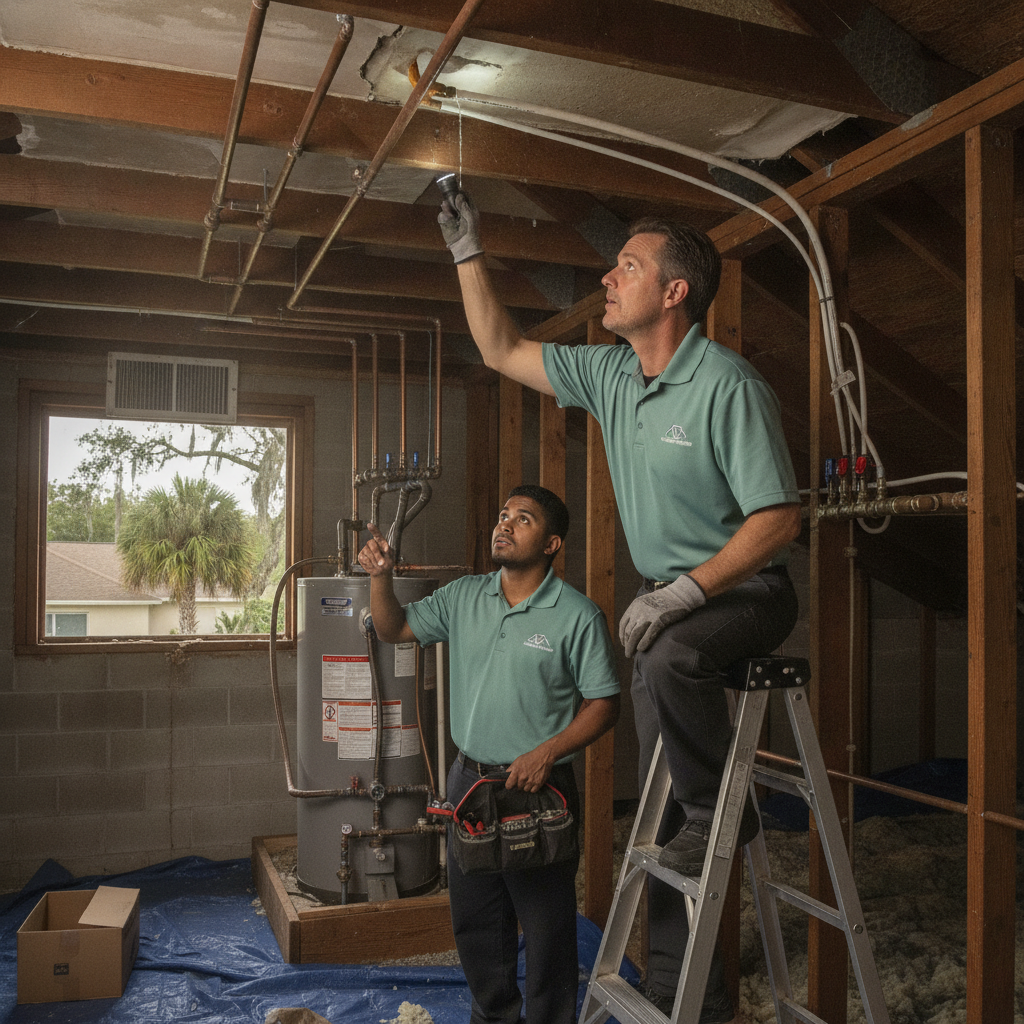
In the attic, on a single-story ranch in Seffner or a 1980s Carrollwood house, they look at the air-handler pan, the condensate trap, and any copper or CPVC that crosses the stained bay. A full pan and a dry roof deck is an AC drain. A dry pan and a wet pipe is plumbing. A wet roof deck after a storm is not a pipe.
They shut the home down in a controlled way. Closing the private shutoff, typically on the side of the house, stops a supply leak from feeding the ceiling while they work. If the stain only moves with the air handler, the water main can stay on and the condensate path gets cleared instead.
When the source is hidden, they use leak detection rather than a guess cut. That is how you avoid opening three rooms to find one pinhole. Once the line is marked, the repair might be a coupling on one bay, a section of failed galvanized, or a conversation about a whole-home repipe if the next leak is already waiting in the same vintage of pipe. A standard single-story repipe on this site runs $4,000 to $10,000. Historic Hyde Park and older South Tampa stock sit higher because the pipe is harder to reach and the finish work is heavier.
Florida’s building code treats a simple leak repair in a pipe, valve, or fixture as work that can sit inside the permit exemption, and it pulls that exemption back the moment the job becomes a replacement or rearrangement of pipes. The under-$7,500 permit shortcut the state passed in 2026 also carves plumbing out, so a repipe is still a permit conversation with the local building department. Confirm the paperwork for your city or county. Do not treat a blog as the permit desk.
After the water stops, the drywall and paint are a separate finish job. The plumber’s job is to find the line and make it hold. Patching first is how the same stain comes back in a month.
How to stop the drip while you wait
You cannot fix a hidden pipe from the living room. You can stop the house from getting wetter.
A bucket under the drip protects the floor and shows you whether the leak is still live. Move furniture and anything with a plug. If water is at a light or a smoke detector, leave those switches alone and kill that circuit at the breaker. Water in a fixture is an electrical problem sitting on top of a plumbing problem.
If the stain is growing on a dry day, shut the water off at the private valve on the side of the house. That is the fastest indoor stop for a supply leak, and the City of Tampa Water Department describes that side-of-house valve as the usual place to do it. The walk-through for finding it lives on our emergency shutoff guide. Closing the main will not stop rain, and it will not stop an AC pan that is already full, but it will stop a pinhole.
If the drip tracks the air conditioner, turning the handler off pauses the condensate. Do not leave a Tampa house closed up without cooling for a long stretch in summer. That is a short pause so the pan can stop overflowing, not a weekend plan.
Do not climb a wet roof during a Gulf storm. Do not cut a hole around a light to “relieve” a bulge. A water-heavy ceiling can drop on its own. Keep people out of that room and let a licensed plumber open it away from wiring.
Photograph the stain, the attic if you can see it from a safe hatch, and the upstairs bath. Those pictures help your carrier and they help the plumber start in the right bay. Coverage for a sudden burst and coverage for slow seepage are not the same thing on a typical Florida HO-3, and the slow hidden leak is the one forms often exclude. Read your own policy, and use our plumbing insurance explainer for the shape of that question. Do not assume a ceiling stain is a roof claim, and do not assume it is denied.
You can confirm a plumbing contractor’s license at Florida’s DBPR search before anyone opens a wall.
Is a ceiling leak an emergency?
An active drip, a sagging panel, or water at a light is urgent because the feed is still on and the finish is already failing. A stain that has not changed, with a dry attic and no drip, is a diagnostic visit, not a panic cut. Either way, the line here is answered, and the plumbers we send are licensed and insured.
Does homeowners insurance cover water leaking from the ceiling?
It depends on the form sitting in your drawer, not on a generic internet rule. Sudden accidental discharge from a pipe is often a different conversation from constant seepage that stained a ceiling over weeks. Photograph everything, call your carrier, and do not wait on a claim number before you shut the water off. A live leak does not pause for paperwork.
Why is there a water mark with no drip?
The leak already moved, or it is evaporating as fast as it weeps. An old condensate overflow, a pinhole that only opens under high use, or a roof that only wets in a tropical band can all leave a mark and then go quiet. If the cavity above it is still damp, the water is not gone. If it is bone dry and the stain is stable, you are looking at history, and you still want the source named before you paint.
When to call us
Call when the ceiling is dripping, sagging, or spreading on a dry day, when an upstairs bath or an attic air handler is the likely source, or when you have shut the water off and still need the line found before anyone pulls drywall. The plumbers we send will sort supply, condensate, and drain overflow and leave the roof to a roofer if that is what the attic shows. Call us at (813) 590-0625.