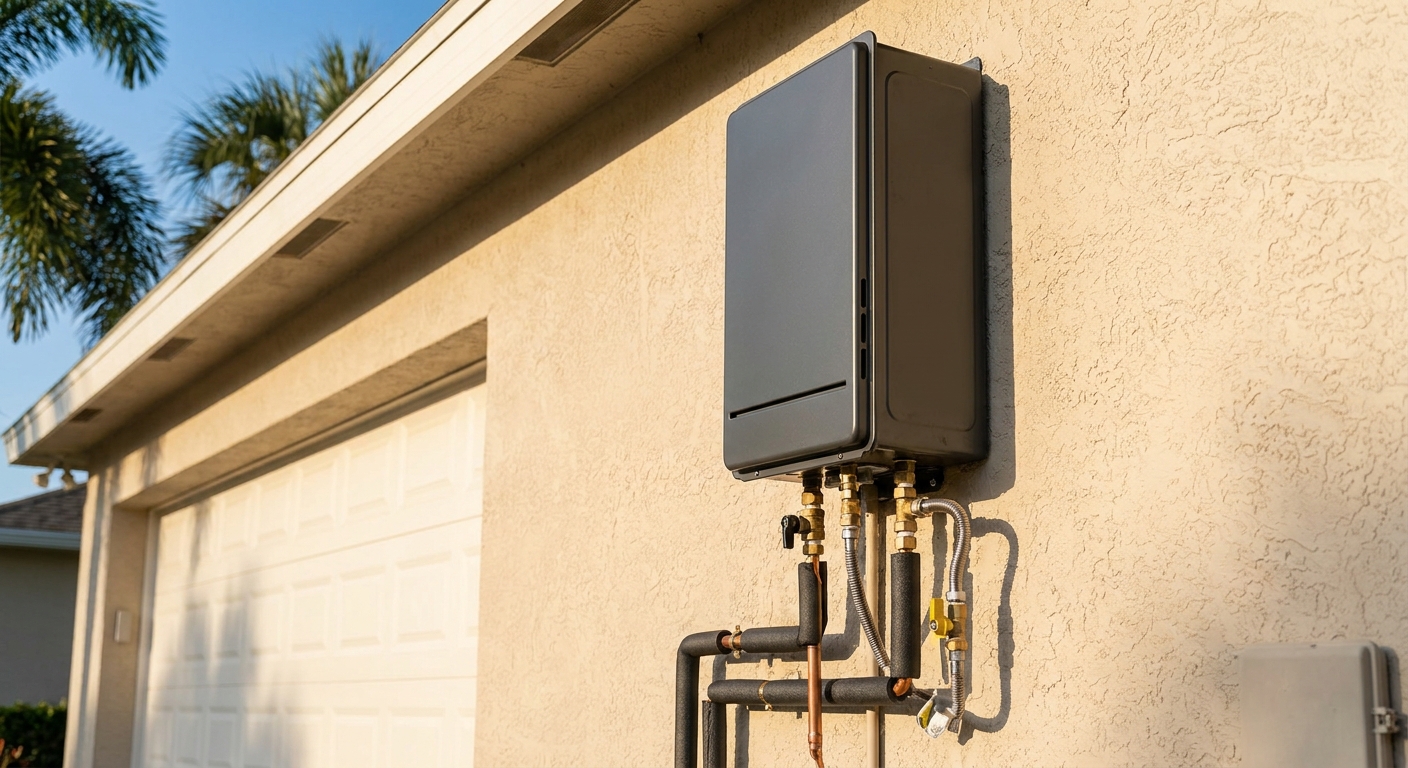
Tankless water heater installation cost depends less on the equipment price than on what your home needs around it. A same-fuel tank replacement generally requires the fewest changes. Converting to gas tankless can add gas-supply, venting, condensate, mounting, and control work. Electric tankless may require electrical-capacity work. Compare itemized quotes for every workable option before choosing.
What changes tankless water heater installation cost?
The largest cost difference comes from changing the way the home heats water. Replacing an existing tank with another tank using the same fuel can preserve much of the surrounding setup. A tankless conversion may change several connected systems.
The U.S. Department of Energy’s tankless water heater installation guide directs installers to evaluate hot-water demand, equipment and operating costs, installation location, maintenance, and the home’s gas, venting, or electrical capacity. Those details should appear in the quote instead of being buried in one project total.
| Installation path | What changes the quote | Best reason to consider it |
|---|---|---|
| Same-fuel tank replacement | Tank connections, installation space, and the condition of nearby components shape the work. | It keeps the project focused when the current fuel and storage setup still fit the household. |
| Gas tankless conversion | Gas capacity, vent routing, condensate handling, mounting location, and control power can add work. | It can provide continuous hot water while demand stays within the unit’s designed output. |
| Electric tankless conversion | Panel capacity, available service, circuit requirements, and wiring distance can control feasibility. | It avoids combustion venting where the electrical system can support the selected equipment. |
A quote that names only the heater model doesn’t describe the whole installation.
Size the unit for simultaneous demand
Tankless sizing starts with peak simultaneous flow and required temperature rise. The question isn’t how many people live in the home. It’s which fixtures may need hot water at the same time and how much heating the unit must provide while that water moves through it.
A unit can keep heating water continuously within its rated capacity. That doesn’t mean every shower, sink, and appliance can draw unlimited hot water together. Demand beyond the selected unit’s output can reduce delivered temperature or flow.
Ask the plumber to show the assumptions behind the selection. The estimate should identify the fixtures counted together, the temperature-rise assumption, and the resulting equipment size. This makes two competing quotes easier to compare.
Compare the full installation, not just the heater
An itemized estimate separates necessary conversion work from optional upgrades. That distinction matters when one proposal looks much higher than another.
A useful quote explains these components:
-
The equipment selection should match the calculated peak demand and available fuel or electrical capacity.
-
Gas proposals should identify any supply changes, venting route, condensate work, and electrical controls included.
-
Electric proposals should state whether the existing panel and service can support the required circuits.
-
The estimate should distinguish required installation materials from optional controls, recirculation equipment, or water-treatment work.
-
Ongoing maintenance should follow the selected manufacturer’s instructions and the water conditions found at the home.
If the existing heater is still repairable, compare the repair scope, service history, and installation requirements before replacing it. A pro matched through our water heater repair service can evaluate both paths.
Water conditions affect the maintenance plan
Tankless heat exchangers contain narrow water passages where scale can collect. The maintenance schedule should come from the selected manufacturer’s instructions and an assessment of the home’s water, not a blanket interval applied to every address.
A water softener assessment can make sense when testing or visible scale shows a treatment need. It isn’t an automatic requirement for every tankless installation. Ask what condition was found, what treatment is being proposed, and how that choice affects the manufacturer’s maintenance instructions.
The estimate should also explain who performs routine flushing, what access the service requires, and which maintenance items remain the homeowner’s responsibility.
Decide whether recirculation belongs in the project
Recirculation addresses wait time at distant fixtures, not the heater’s total output. It moves hot water through a planned return path or compatible control arrangement so water is available closer to the fixture.
That convenience brings its own equipment, controls, piping choices, and operating costs. It shouldn’t be treated as a universal add-on or a guaranteed cure for every long wait. Ask the plumber to explain the proposed layout, control method, and expected effect at the specific bathroom or sink causing the complaint.
Verify the home’s actual hookups and jurisdiction
The home’s present connections matter more than assumptions about its neighborhood. Two nearby houses can have different fuel, electrical, venting, and utility arrangements.
The address also needs to be checked carefully. A New Port Richey mailing address and a city utility connection don’t by themselves prove that a property sits within city limits. For a New Port Richey home, the quote should identify the actual service provider and jurisdiction from the property information rather than relying on the mailing label.
Frequently asked questions
Is tankless always cheaper over time?
No. The result depends on installation work, household use, fuel or electricity costs, maintenance, repair history, and how long the owner keeps the system. Compare ongoing costs with the upfront estimate without assuming a universal payback date.
Does tankless mean unlimited hot water?
A correctly selected unit can heat water continuously while demand remains within its rated capacity. Several fixtures running together can exceed that capacity, which is why peak simultaneous flow belongs in the sizing calculation.
Should I repair my current heater first?
A repair comparison is useful when the tank or tankless unit may still be serviceable. Ask for the repair scope, model and service history, and the installation changes required for replacement. Those facts show whether replacement solves a real limitation or merely changes equipment.
When to call us
Call when you need a licensed plumber to compare a same-fuel tank replacement with gas or electric tankless options. We’ll match you with a local pro who can inspect the hookups, calculate demand, and provide itemized choices. Call us at (813) 590-0625.