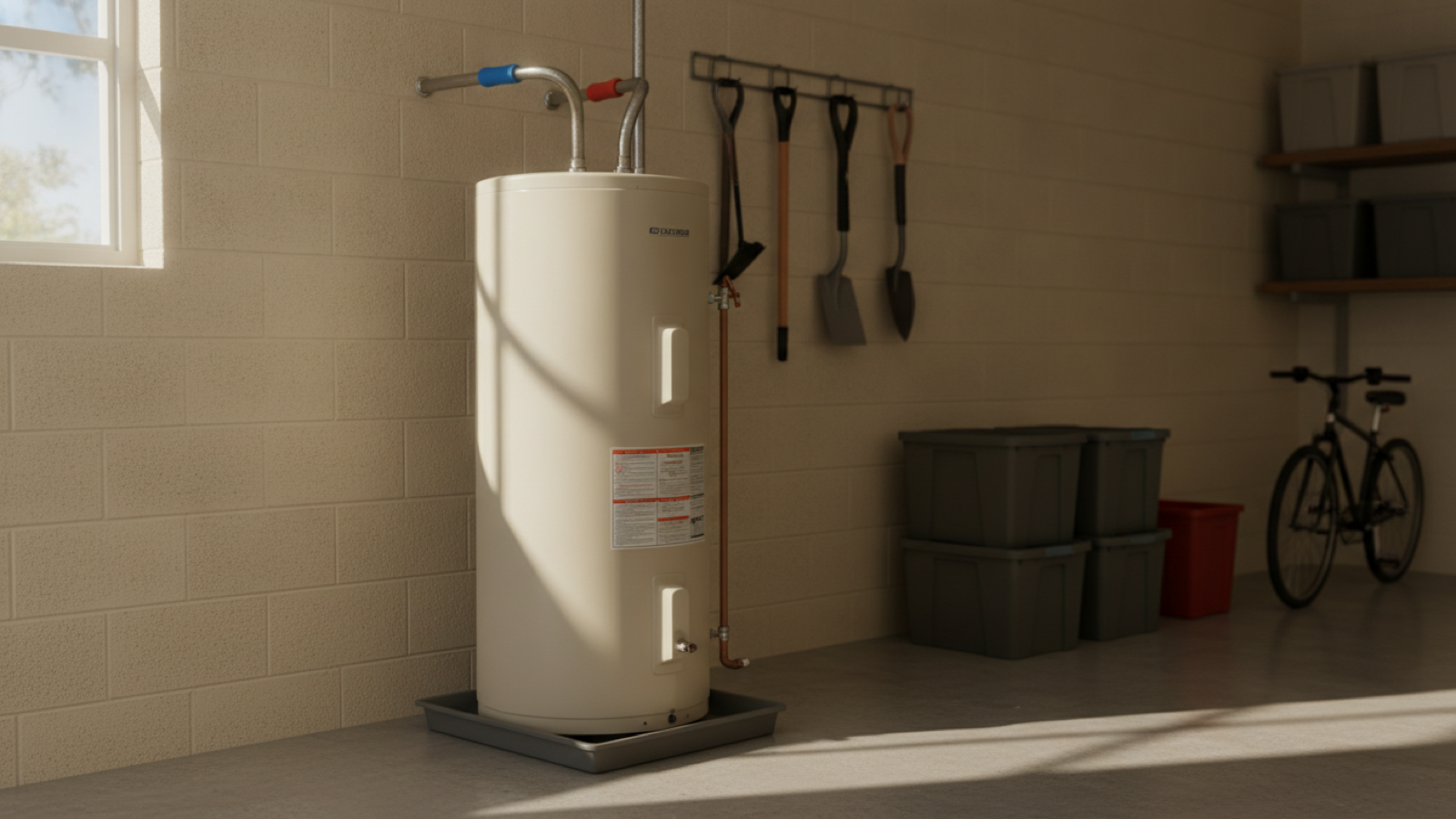
If only your hot water smells like rotten eggs, the water heater is almost always the source. Inside the tank, sulfate-reducing bacteria can interact with a magnesium anode rod and produce hydrogen sulfide gas. The usual repair is a tank flush, disinfection, and an anode made from a different metal. If hot and cold water both smell, look at the water supply, usually a private well.
Why does only the hot water smell?
Only-hot-water odor points to conditions inside the water heater. The tank gives bacteria warm water, sulfate, and time to react.
A sacrificial anode rod protects the steel tank from corrosion. Many heaters use magnesium. That metal can supply electrons that help convert sulfate into hydrogen sulfide, according to the Minnesota Department of Health. Hydrogen sulfide creates the familiar rotten-egg odor.
Penn State Extension describes the same hot-water-only pattern. Its guidance explains that replacing the magnesium rod with an aluminum rod can stop the reaction while maintaining corrosion protection.
This problem can happen on city water or well water. A city-water heater that sits unused can still develop the odor. That pattern shows up when a Tampa Bay condo, seasonal rental, or snowbird home stays closed between visits.
How do you tell the water heater from the well?
Compare hot and cold water after the plumbing has rested for several hours. Smell water from separate hot and cold faucets, away from the sink drain.
| Odor pattern | Likely source | What it means |
|---|---|---|
| Only the hot water smells | The water heater | Bacteria and the magnesium anode may be producing hydrogen sulfide inside the tank. |
| Hot and cold water both smell | The incoming water supply | A private well or another supply-side condition needs testing and treatment. |
| The odor appears after a long vacancy | Stagnant water in the heater | The tank needs service before assuming the whole water supply is affected. |
Private wells are common around Odessa, Land O’ Lakes, Dade City, and rural Hillsborough County. If both taps smell, start with our guide to sulfur odors in Pasco well water or contact a plumber serving the Odessa well-water corridor.
City-water homes need a different reading. The City of Tampa’s 2025 water quality report says chlorine is added before ammonia creates chloramine, keeping water disinfected as it moves through the pipes. Pinellas County Utilities switches from chloramine to plain chlorine twice yearly, as covered in our water filter and softener guide. Neither detail replaces the hot-versus-cold test at your faucet.
What actually fixes it?
A tank flush, disinfection, and different anode material address the usual heater-side cause. The plumber drains sediment, disinfects the tank, and checks whether the magnesium rod should be replaced with another material, such as aluminum.
The Minnesota Department of Health also lists temporary heating to 160°F for several hours as a disinfection option. That’s a plumber-controlled service step, not a temperature to leave set. Water that hot can scald at the tap.
Removing the anode may stop its part in the reaction, but it also removes corrosion protection. Replacing it preserves that protection while changing the material involved. Our water heater repair service covers tank flushing, anode replacement, and diagnosis.
Most water heater repairs through our network run $150 to $450, depending on the part. An anode swap falls within that general repair category, but access, tank condition, and the required service steps shape the quote.
Odor alone doesn’t prove the heater needs replacement. Rusty or discolored water on the hot side can point toward internal tank corrosion. Review how long water heaters last and the local repair-versus-replace factors before replacing a repairable tank.
Why do Tampa Bay homes that sit empty get it worse?
A water heater that sits unused gives bacteria time to multiply. The odor often becomes noticeable when hot water starts moving again after a vacancy.
That pattern fits Tampa Bay’s seasonal housing. A Gulf beach condo may stay closed between visits. A Carrollwood house can sit empty during a long trip. City water may arrive with disinfectant, yet water held inside the heater remains stagnant.
Test both taps before scheduling work. Let the plumbing rest for several hours, then compare cold water with hot water. If the smell appears only after the heater warms the water, tank service from a local plumber is the logical next step.
Frequently asked questions
Is rotten-egg-smelling hot water dangerous?
The odor deserves attention, but smell alone doesn’t establish a dangerous concentration. Penn State Extension says the human nose detects hydrogen sulfide well before it causes health concerns. Most people can detect levels below 0.5 mg/L.
Hydrogen sulfide is poisonous and flammable at higher concentrations. A strong, persistent, or unexplained odor needs professional diagnosis.
How much does an anode rod replacement cost?
Anode replacement fits within our published water heater repair range of $150 to $450, depending on the part. The quote changes with tank access, corrosion, flushing, and disinfection needs.
Will flushing the tank stop the smell?
Flushing and disinfecting can remove the bacteria and stagnant water causing the odor. If the magnesium anode is also driving the reaction, the plumber may need to replace it with a different material.
Can I remove the magnesium anode rod?
Removing the rod takes away part of the tank’s corrosion protection. Replacing it with another material, such as aluminum, addresses the odor mechanism without leaving the tank unprotected.
Does Tampa’s hard water cause the rotten-egg smell?
Hardness and hydrogen sulfide odor are different water-heater issues. The City of Tampa’s 2025 water quality report measured finished-water hardness at 211 mg/L, or 12.3 grains per gallon. Our guide to Tampa hard water and water heaters explains the separate scale problem.
Can a tankless water heater have the same anode problem?
A tankless heater doesn’t store water in a steel tank with a sacrificial anode. A sulfur odor at a tankless hot tap needs a different diagnosis involving the incoming supply and the unit. Our guide to tankless water heaters in Florida covers how those units differ.
When to call us
Call when the odor returns, the hot water is discolored, or the anode can’t be safely accessed. We’ll match you with a licensed plumber from our Tampa Bay network for tank diagnosis, flushing, and repair. Call us at (813) 590-0625.